



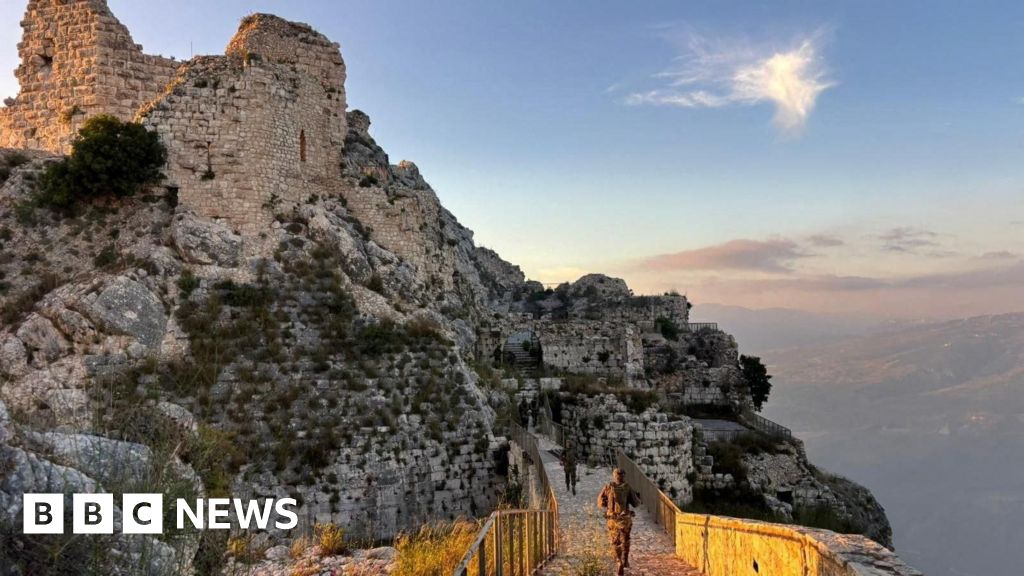
Israel captures Beaufort Castle in southern Lebanon, expands ground offensive

The Israeli military has captured the strategic site of Beaufort Castle in southern Lebanon, which Prime Minister Benjamin Netanyahu described as a “decisive shift” in the offensive against Hezbollah. Ground troops have moved deeper into Lebanese territory beyond the Litani river, and the Israel Defense Forces (IDF) issued a second evacuation warning for residents below the Zahrani river. The UK, France, and Germany criticized the escalation, with UK Foreign Secretary Yvette Cooper calling for the conflict to end and for Hezbollah to disarm. Lebanon’s Prime Minister Nawaf Salam accused Israel of “collective punishment” and a “scorched-earth policy.” The IDF spokesman said a “significant number” of soldiers were involved and that the operation was expanding to additional areas. France has requested a United Nations Security Council meeting to discuss the operations, while German Foreign Minister Johann Wadephul called the advance a “cause for serious concern.”
What’s reported
Israel captured Beaufort Castle, a Crusader-era fortress, which it also held from 1982 to 2000.
Netanyahu said the capture marks a “decisive stage and decisive shift” in policy.
The IDF warned residents to leave the entire area of southern Lebanon below the Zahrani river for the second time in recent days.
UK Foreign Secretary Yvette Cooper stated: “Israel’s military escalation in Lebanon has killed and displaced civilians, destroyed infrastructure, and eroded space for diplomacy.”
Lebanon’s Health Ministry reported 13 hospital staff injured in an airstrike near Hiram hospital in Tyre.
One Israeli soldier was killed; Hezbollah fired 25 projectiles toward Israel.
The temporary ceasefire between Israel and Lebanon, extended twice since last month, is described as “essentially in tatters.”
A fourth round of negotiations between Israeli and Lebanese delegations is due in Washington this week.
Conflicting accounts
The article reports that Israeli officials say Hezbollah’s attacks violate the temporary ceasefire, while Lebanese officials point to Israeli strikes as violations.
Open questions
The outcome of the upcoming fourth round of negotiations in Washington, and whether either side will alter military operations, is not reported.
Key figures
Benjamin Netanyahu, Prime Minister of Israel
Yvette Cooper, UK Foreign Secretary
Nawaf Salam, Prime Minister of Lebanon
Emmanuel Macron, President of France
Jean-Noël Barrot, French Foreign Minister
Johann Wadephul, German Foreign Minister
Israel Katz, Israeli Defense Minister
An IDF spokesman (unnamed)
Sources: BBC News