



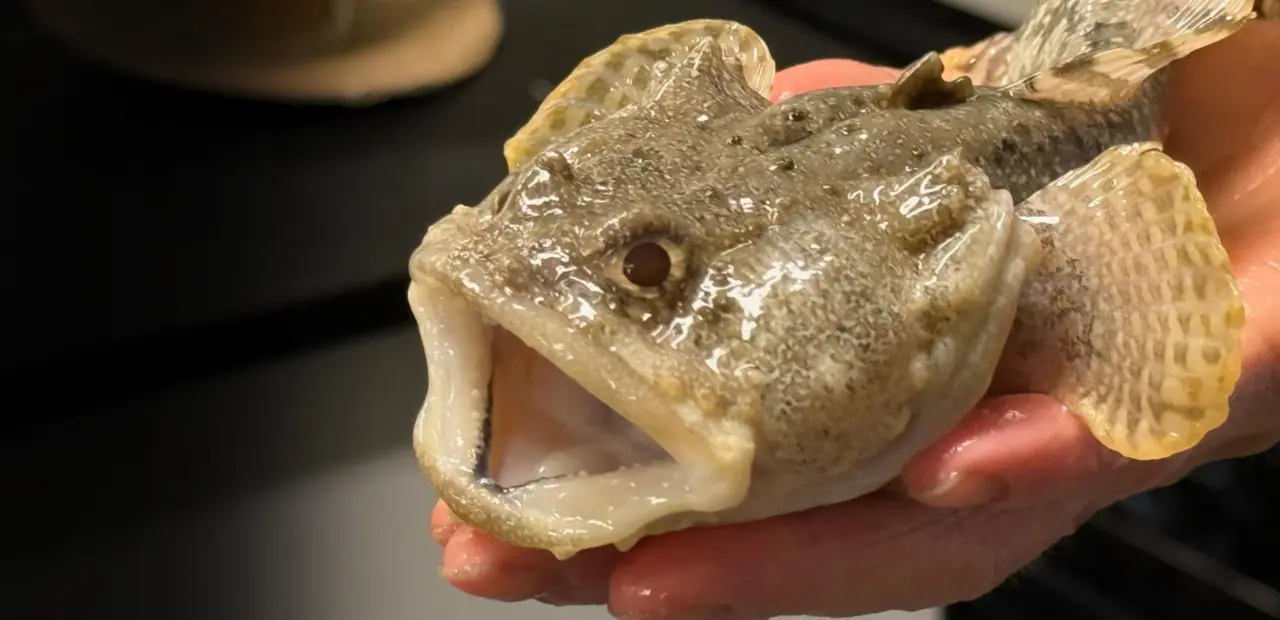
Gut bacteria in fish may help produce calcium carbonate, study suggests

The Story
Researchers from the University of Miami Rosenstiel School have found evidence that tiny microbes living inside marine fish may help produce calcium carbonate, a mineral important for ocean chemistry and the marine carbon cycle. The study, led by former graduate student Anthony Bonacolta, suggests that gut bacteria and fish work together in a previously overlooked partnership. For years, scientists believed fish handled this mineral production on their own. The new findings indicate that microbes in the fish intestine may also be essential participants. Laboratory experiments used Gulf toadfish exposed to water with different salt concentrations. Fish in low-salinity water did not produce calcium carbonate pellets, while those in seawater and hypersaline water did. DNA and RNA analyses showed that vibrios, especially Photobacterium damselae subsp. damselae, were highly abundant in the intestinal tract and the pellets, with genetic evidence suggesting they may contribute directly to mineral formation.
Key Facts
- The research was led by former University of Miami graduate student Anthony Bonacolta.
- The study suggests gut bacteria and marine fish work together to produce calcium carbonate.
- Bony fish (teleosts) drink seawater and excrete solid calcium carbonate pellets called ichthyocarbonates.
- Lab experiments used Gulf toadfish in brackish (9 ppt), seawater (35 ppt), and hypersaline (60 ppt) conditions.
- Fish in low-salinity water did not produce ichthyocarbonates; those in seawater and hypersaline water did.
- Vibrios, especially Photobacterium damselae subsp. damselae, were abundant in both the intestinal tract and the ichthyocarbonates.
- Genetic evidence indicated these bacteria may contribute to calcium carbonate formation.
- The research was supported by start-up funds from the University of Miami and Project PID2023-152522NB-I00 from Spain’s Ministry of Science, Innovation, and Universities.
Conflicting Reports
No conflicting reports identified in the source article.
Still Unclear
The article does not detail the exact mechanism by which the bacteria contribute to calcium carbonate formation, nor whether this symbiosis is common in other fish species.
Misconceptions
The study corrects the previous assumption that fish produce calcium carbonate entirely on their own, revealing a likely partnership with gut microbes.
Key Figures
- Anthony Bonacolta, former graduate student at the University of Miami
- Martin Grosell, Maytag Professor of Ichthyology and chair of the Department of Marine Biology and Ecology, senior author
Sources: ScienceDaily