



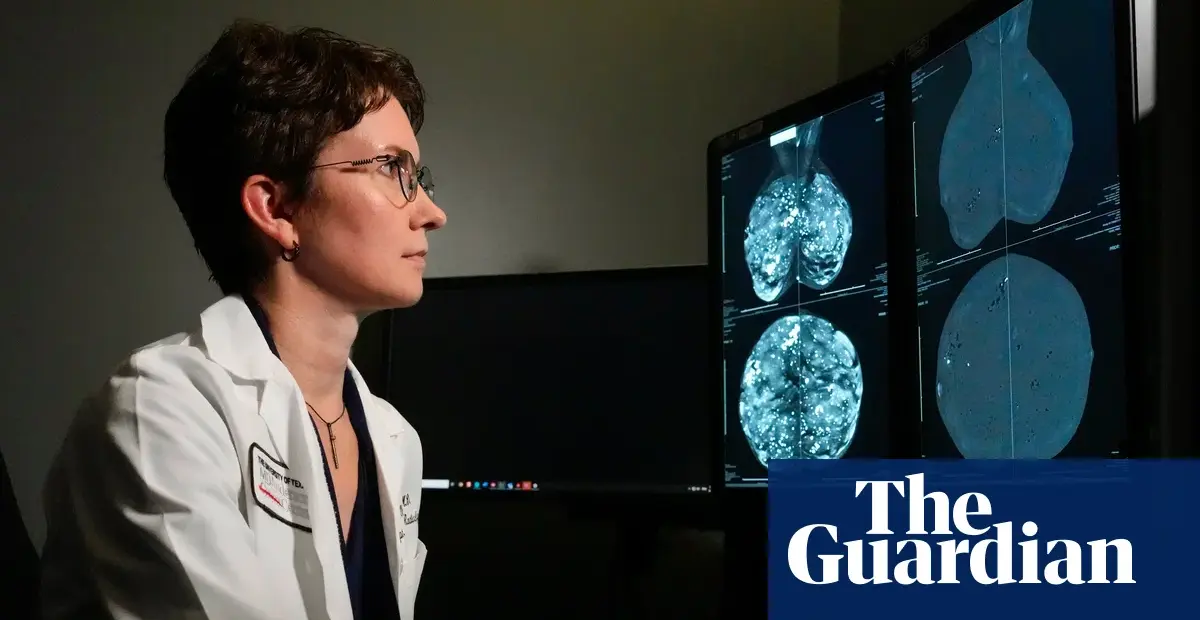
Genomic test may allow breast cancer patients to skip chemotherapy

A genomic test could enable many breast cancer patients to safely avoid chemotherapy, according to results from an international trial reported by the Guardian. The Optima trial, led by University College London, followed more than 4,000 patients with newly diagnosed hormone-positive breast cancer across six countries. The test analyzes the activity of 50 genes in tumor tissue to determine the risk of cancer returning within a decade. Patients with low test scores who received only hormone therapy had similar outcomes to those who had chemotherapy and hormone therapy: 94% were alive and recurrence-free after five years, compared to 95% in the chemotherapy group. The findings are set to be presented at the American Society of Clinical Oncology’s annual meeting in Chicago. Researchers stated the trial provides evidence that many patients can skip chemotherapy without compromising outcomes.
What’s reported
The Optima trial involved 4,429 patients aged 40 or above with hormone-positive breast cancer.
Patients were from the UK, Norway, Sweden, Australia, New Zealand and Thailand.
The Prosigna test, made by Veracyte, analyzes 50 genes to produce a score indicating the risk of breast cancer recurrence within 10 years.
In the test group, patients with high scores received chemotherapy and hormone therapy; those with low scores received hormone therapy alone.
Five-year recurrence-free survival was 95% for the chemotherapy plus hormone therapy group and 94% for the hormone-only group among low-score patients.
The results suggest that for patients with low test scores, chemotherapy offered little or no additional benefit.
Some men participated but there were too few to draw firm conclusions for that group.
The trial received funding from the National Institute for Health and Care Research (NIHR), Veracyte, and cancer charities.
Open questions
Whether the test is equally effective for male breast cancer patients, as the trial had too few male participants to draw conclusions.
Key figures
Prof Rob Stein, chief investigator and professor of breast oncology at University College London
Prof Iain MacPherson, co-chief investigator and professor of breast oncology at University of Glasgow
One female participant quoted in the Guardian article, referred to as “one woman who took part in the trial”
Sources: The Guardian