



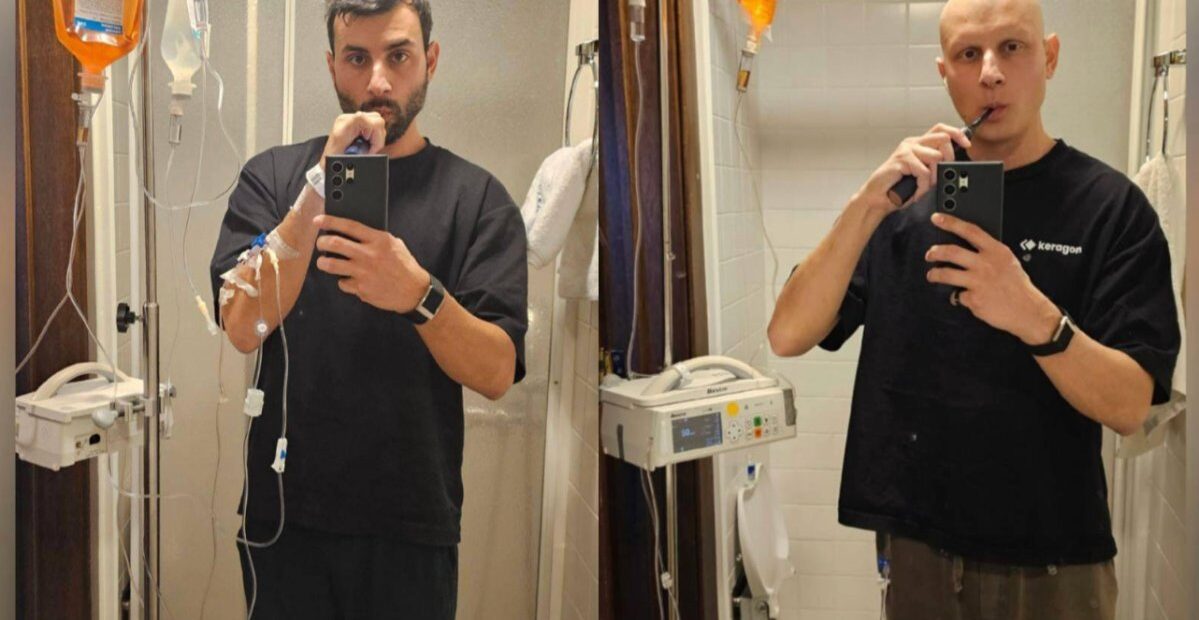
Founder uses AI to navigate rare cancer diagnosis and treatment

9 reported
Conno Christou, a 35-year-old founder who tracked his health meticulously, was diagnosed with an aggressive form of non-Hodgkin’s lymphoma after a swollen arm led to the discovery of an 11-by-11-by-8 centimeter mass behind his sternum. The rare diagnosis, affecting roughly one in 420,000 people, was caused by a random genetic mutation with no connection to lifestyle, diet, or stress. Christou gathered 12 medical opinions before choosing a more aggressive chemotherapy regimen, which had an 85% success rate for his presentation compared to 60% for a lighter option. During six months of treatment, he used a wearable device and voice transcription to log symptoms, and fed blood results, scan data, and journal entries into the AI model Claude. After treatment, a final PET scan was ambiguous, but Claude flagged a known phenomenon called thymus rebound, which occurs in patients under 40 recovering from this lymphoma. A fourth doctor confirmed the finding, and no radiotherapy was needed. Christou says AI helped him ask the right questions but did not replace doctors.
What’s reported
Christou had been doing annual bloodwork for four consecutive years and tracking biomarkers before his diagnosis.
The tumor had only existed for about three months; in three more weeks it would have reached stage four.
Two world-class oncologists gave diametrically opposite recommendations: one recommended a lighter chemo regimen, the other a harder continuous in-hospital infusion.
Christou gathered 12 opinions total; 11 to one favored the harder path.
He wore a Whoop band throughout treatment and found it accurate at predicting when his immune system would bottom out.
A public opinion poll released in March found that a third of American adults now use chatbots for health information and advice.
Experts urge caution; Danielle Bitterman of Mass General Brigham has said general-purpose chatbots are frequently wrong and not thoroughly evaluated for personalized diagnoses.
The false-positive rate on end-of-treatment PET scans for this specific lymphoma is around 60%.
Christou built Keragon, an AI-powered platform that helps medical practices automate administrative operations.
Key figures
Conno Christou, founder of Keragon, patient
Danielle Bitterman, clinical lead for data science and AI at Mass General Brigham (quoted via New York Times)
Sources: TechCrunch