
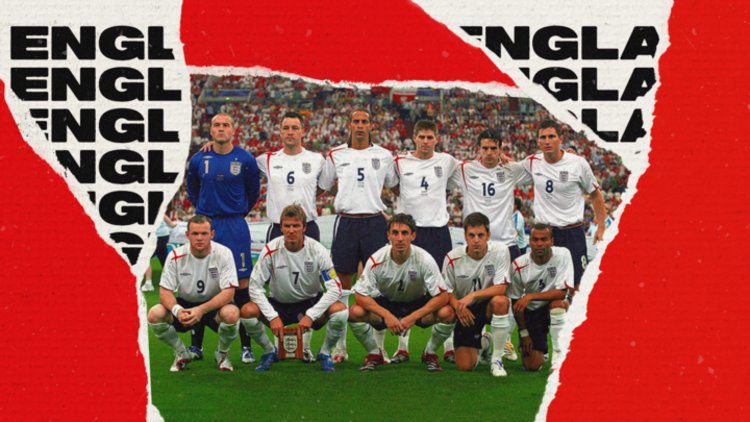
England’s 2006 World Cup team revisited in BBC documentary

The Story
A new BBC documentary titled “The Golden Generation” examines England’s star-studded 2006 World Cup squad and why it failed to deliver on expectations. Former players and staff reflect on the team’s high-profile build-up, including a lavish party hosted by David Beckham and the intense media focus on players’ wives and girlfriends, known as WAGs. Rio Ferdinand says he does not look back on that time with any happiness and describes the “golden generation” label as stupid and embarrassing. He points to club rivalries and a lack of togetherness as factors that hurt the team. Former assistant and later manager Steve McClaren acknowledges the difficulty of fitting all the star players into one team. Wayne Rooney, however, disputes Ferdinand’s account of rivalries within the squad.
Key Facts
- Rio Ferdinand said he feels embarrassed by the “golden generation” label and does not look back on that time with happiness.
- The documentary is titled “The Golden Generation” and is produced by BBC.
- The 2006 World Cup in Germany was seen as the time for the team to deliver, following quarter-final exits in 2002 and 2004.
- Theo Walcott, a 17-year-old who had not played for Arsenal, was included in the squad as Eriksson’s “gamble”, which Rooney called a “strange decision”.
- David Beckham and his wife Victoria hosted a pre-tournament charity party at their mansion with celebrities including Robbie Williams and Gordon Ramsay.
- Manager Sven-Goran Eriksson told Sunday newspapers before the tournament: “I think we will win it this time.”
- The WAGs were housed in the same hotel as many journalists, and their activities in Baden-Baden were widely covered.
- Former FA executive director David Davies said blaming the WAGs for England’s failure is “a complete nonsense” and noted that eventual champions Italy also had partners at the tournament.
- Rio Ferdinand said there were “fake relationships” in the England squad and that club rivalries played a big part in the team’s failure.
- Wayne Rooney said he “loved” playing for England and disagreed with talk of rivalries, saying he did not see them.
- Steve McClaren said that while players felt more comfortable at their clubs, rivalries were not a deciding factor for England’s poor performances.
- Eriksson knew he was being replaced by McClaren after the tournament, having announced his resignation in January 2006.
Conflicting Reports
- Rio Ferdinand stated that club rivalries and a lack of togetherness hurt the England squad, while Wayne Rooney said he did not feel rivalries between players and was “surprised” by Ferdinand’s account. Steve McClaren acknowledged comfort levels at clubs but did not view rivalries as a deciding factor for poor performance.
Still Unclear
- The full details of the News of the World “fake sheikh” sting involving Eriksson, which was published six months before the World Cup, are not fully described as the article text cuts off.
Misconceptions
- The documentary addresses the misconception that the WAGs’ antics were the reason England did not win the World Cup. Former FA executive director David Davies stated that blaming the WAGs is “a complete nonsense” and pointed out that Italy also had partners at the tournament.
Key Figures
- Rio Ferdinand, former England centre-back
- Steve McClaren, former England assistant manager and later manager
- Wayne Rooney, former England forward
- David Beckham, former England captain
- Sven-Goran Eriksson, former England manager
- David Davies, former FA executive director
- Theo Walcott, former England forward
- Owen Hargreaves, former England midfielder
- Clemmie Moodie, showbiz reporter
- Alison Kervin, journalist
- Nancy Dell’Olio, partner of Eriksson
- Victoria Beckham, wife of David Beckham
- Adam Crozier, former FA chief executive
Sources: BBC News