
Ebola treatment trials begin in DRC outbreak with no approved drugs

12 reported3 unconfirmed
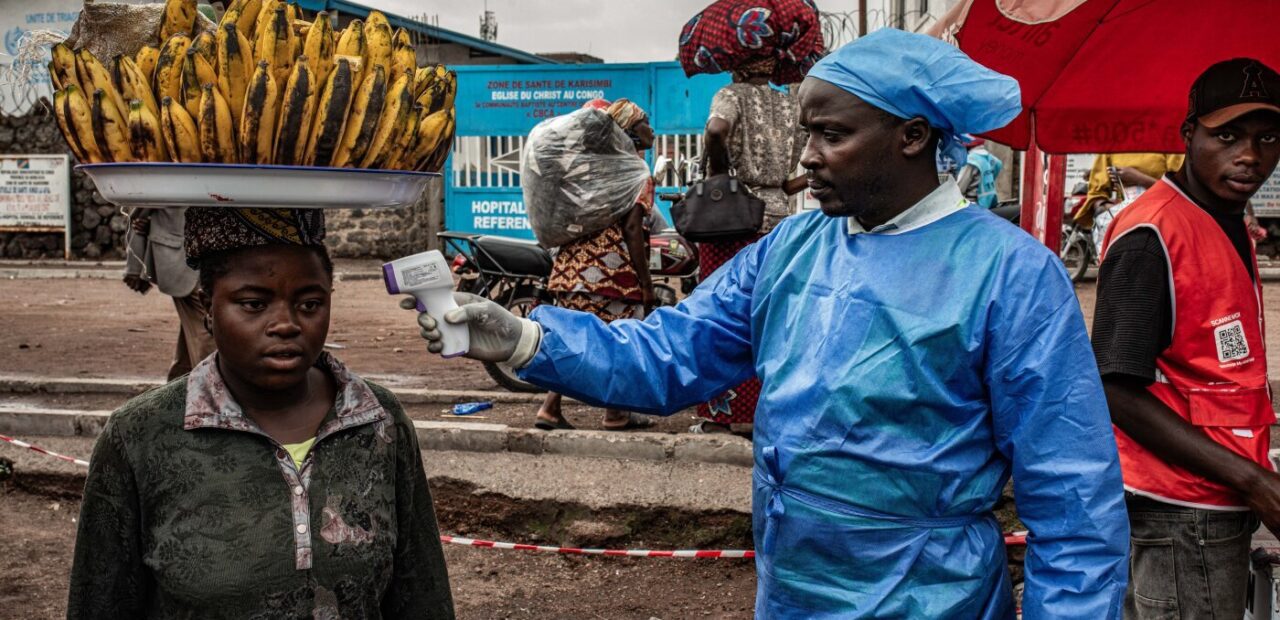
According to a single-source report from NPR, clinical trials have begun in the Democratic Republic of Congo to test treatments for the Bundibugyo strain of Ebola, for which no specialized treatments exist. The outbreak, declared over 50 days ago in the DRC and Uganda, has killed over 500 people and sickened more than 1,560. The World Health Organization announced last Thursday that the first patients were enrolled in a trial testing two drugs: the antiviral remdesivir and the monoclonal antibody MBP-134. A third trial, expected to start this week, will test the antiviral obeldesivir as a preventive measure for close contacts of Ebola cases. Researchers are repurposing existing drugs because developing new ones from scratch would take years. The trials face challenges including armed conflict, attacks on health centers, and community mistrust. WHO officials declined to disclose the exact location of the clinic currently enrolling patients to protect clinicians.
What’s reported
The outbreak was declared over 50 days ago in the Democratic Republic of Congo and Uganda.
The Bundibugyo strain is a rarer species of Ebola than the Zaire strain.
No specialized treatments exist for Bundibugyo virus disease.
The outbreak has killed over 500 people and sickened more than 1,560.
Last Thursday, WHO announced the first patients enrolled in a clinical trial testing two drugs against Bundibugyo.
The two drugs being tested for treatment are remdesivir (Gilead Sciences) and MBP-134 (Mapp Biopharmaceutical).
A third trial, expected to start this week, will test obeldesivir (Gilead Sciences) as post-exposure prophylaxis.
The trials are a collaborative effort between WHO, Africa CDC, universities, and nonprofits.
BARDA, a U.S. government agency, funded research behind MBP-134 and donated doses for the trial.
Only one clinic in the DRC is currently involved in the treatment trial, with plans to expand.
Several health centers have been attacked since the outbreak, likely spurred by mistrust.
WHO officials declined to disclose the exact location of the clinic to protect clinicians.
Open questions
How long the trials will take to yield definitive results (could take months or into next year, or require over 1,000 patients).
Whether any of the drugs will prove effective against Bundibugyo.
When vaccine testing might begin (months away).
Key figures
Amanda Rojek, physician scientist at the University of Oxford
Salim Abdool Karim, director of the Centre for the AIDS Programme of Research in South Africa and member of the Africa CDC emergency committee
Vasee Moorthy, WHO's research and development lead for the outbreak
Yazdan Yazdanpanah, infectious disease physician and epidemiologist at ANRS Emerging infectious diseases in France
Sources: NPR