



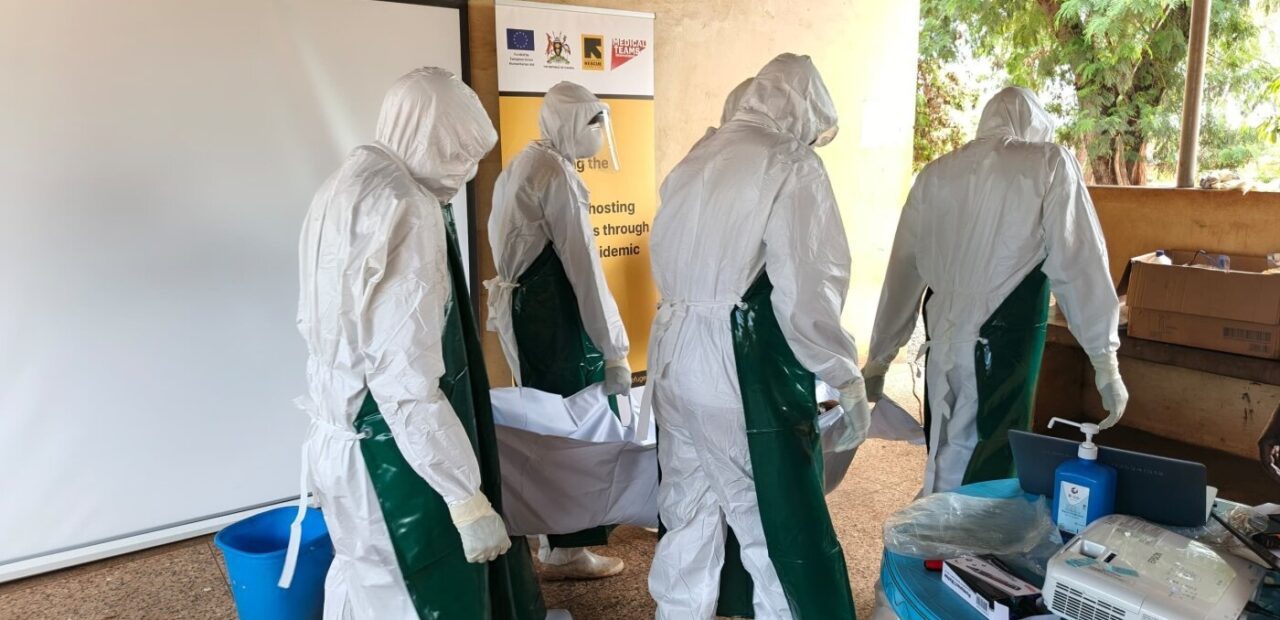
Ebola outbreak spreads as aid cuts and misinformation hinder response

A large Ebola outbreak in central Africa is spreading, with over 1,000 suspected and confirmed cases and at least 223 deaths, according to the World Health Organization. Health workers say that number is likely a major undercount. The epicenter is in the Democratic Republic of Congo. Uganda closed its official border crossings with the DRC on May 27 to contain the spread. Misinformation on social media has fueled rumors that Ebola is not real or that health workers are out to profit. Leonard Musinguzi, a community and surveillance officer for the International Rescue Committee in Uganda, reported that reduced funding has cut his public health messaging from five radio talk shows to one. The U.S. State Department responded that recent federal funding changes did not significantly affect global health programs in the eastern DRC. The department also said the U.S. mobilized resources within 24 hours of the first confirmed case.
What’s reported
More than 1,000 suspected and confirmed Ebola cases have been recorded, with at least 223 deaths, per the World Health Organization.
Health workers say this is likely a major undercount.
The outbreak’s epicenter is the Democratic Republic of Congo.
Uganda closed its official border crossings with the DRC on May 27.
Leonard Musinguzi is a community and surveillance officer for the International Rescue Committee in Uganda.
He previously funded five radio talk shows for public health messaging; now only one due to reduced funding.
U.S. State Department spokesman Tommy Pigott stated that recent federal funding changes did not have a significant effect on U.S. funding for global health programs in eastern DRC.
The U.S. responded within 24 hours of the first confirmed case, mobilizing medical, humanitarian, operational, and consular resources.
Social media rumors claim Ebola is not real or that health care workers are out to profit.
Conflicting accounts
The article reports that aid cuts are hampering the frontline response, with reduced funding for the IRC’s radio messaging. However, the U.S. State Department stated that recent federal funding changes did not have any significant effect on U.S. funding levels for global health programs or health security programs in the eastern DRC.
Key figures
Leonard Musinguzi – community and surveillance officer for the International Rescue Committee in Uganda.
Tommy Pigott – State Department spokesman.
Sources: NPR