


Ebola outbreak of rare strain spreads in DR Congo and Uganda

The Story
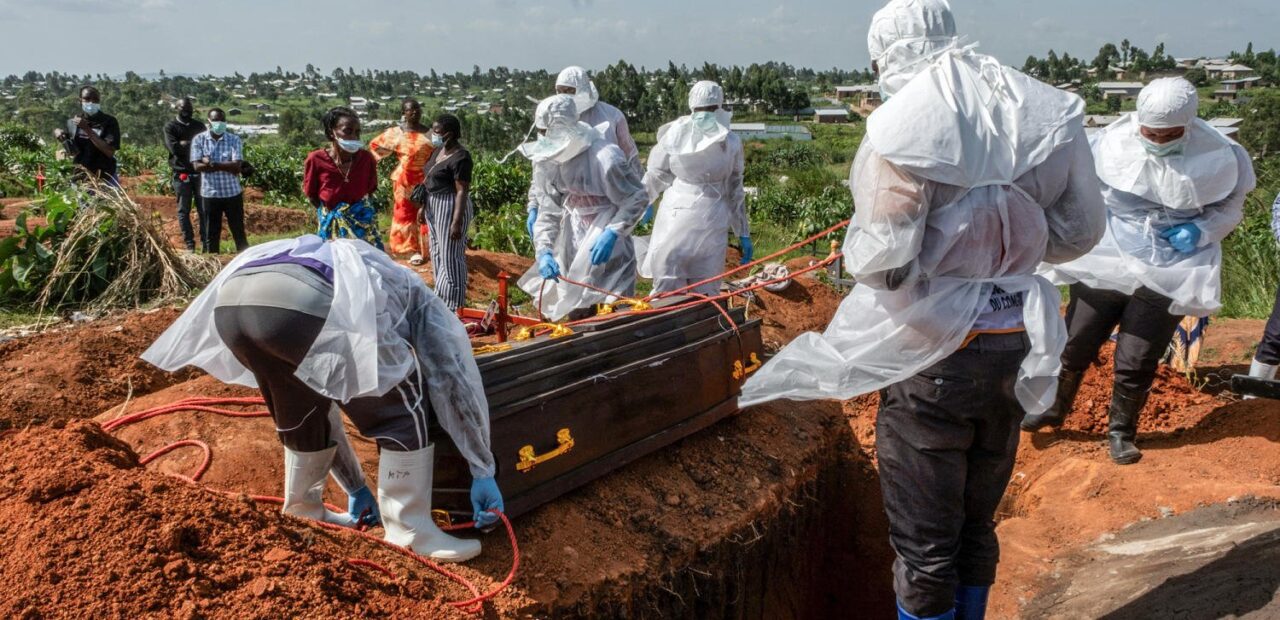
An Ebola outbreak caused by the rare Bundibugyo virus strain is affecting the Democratic Republic of Congo and Uganda, according to health officials. The World Health Organization and the Africa Centres for Disease Control and Prevention are monitoring the spread. There is no approved vaccine or specific treatment for this strain. WHO Director-General Tedros Adhanom Ghebreyesus has visited the epicenter in Bunia, Congo, and urged safe burial practices. Health authorities are focusing on traditional containment measures such as contact tracing and isolation. The strain has been linked to two prior outbreaks in 2007 and 2012. International aid groups are deploying resources to support response efforts.
Key Facts
- The outbreak involves the Bundibugyo strain of Ebola, which has no approved vaccine or specific treatment.
- The World Health Organization and the Africa Centres for Disease Control and Prevention are both involved in the response.
- WHO Director-General Tedros Adhanom Ghebreyesus visited Bunia in Congo’s Ituri province, the outbreak epicenter.
- Health officials are urging safe burial practices and other infection control measures to limit spread.
Conflicting Reports
Sources report different confirmed case and death counts. NBC News reports 43 confirmed deaths (42 in Congo, one in Uganda) and 272 confirmed cases as of Saturday. Sciencenews.org reports seven confirmed deaths and 82 confirmed cases as of May 22, citing WHO data. NBC News reports nine confirmed cases in Uganda; sciencenews.org reports two people in Uganda. The discrepancies may reflect different reporting dates (May 30 vs. May 22), though neither source explicitly reconciles the figures.
Still Unclear
- Whether the WHO declared a public health emergency of international concern (only sciencenews.org reports a declaration on May 17).
- The number of suspected cases: NBC News reports more than 1,100; sciencenews.org reports almost 750.
- The number of suspected deaths: NBC News reports 349; sciencenews.org reports 177.
- Recovery of five patients in Bunia (single-source claim from NBC News citing the AP).
- Details of U.S. aid ($23 million) and WHO medical supplies (11 metric tons) are only in sciencenews.org.
- The identity and status of an American doctor flown to Germany for treatment (single-source claim from sciencenews.org).
- The specific timeline for a Bundibugyo vaccine (six to nine months, per sciencenews.org quoting a WHO adviser).
- The role of Oxfam in setting up community committees and distributing hygiene supplies (only in sciencenews.org).
Misconceptions
No widespread misconceptions addressed in the sources.
Key Figures
- Tedros Adhanom Ghebreyesus – WHO Director-General
- Fatuma Noor – Communications manager, Oxfam International
- Luke Nyakarahuka – Epidemiologist, Uganda Virus Research Institute
- Vasee Moorthy – Senior adviser, WHO
- Helen Rees – Vaccine researcher, University of the Witwatersrand Johannesburg
Sources: NBC News, sciencenews.org