



Crime Surges in Latin America Fuel Conservative Backlash

12 reported
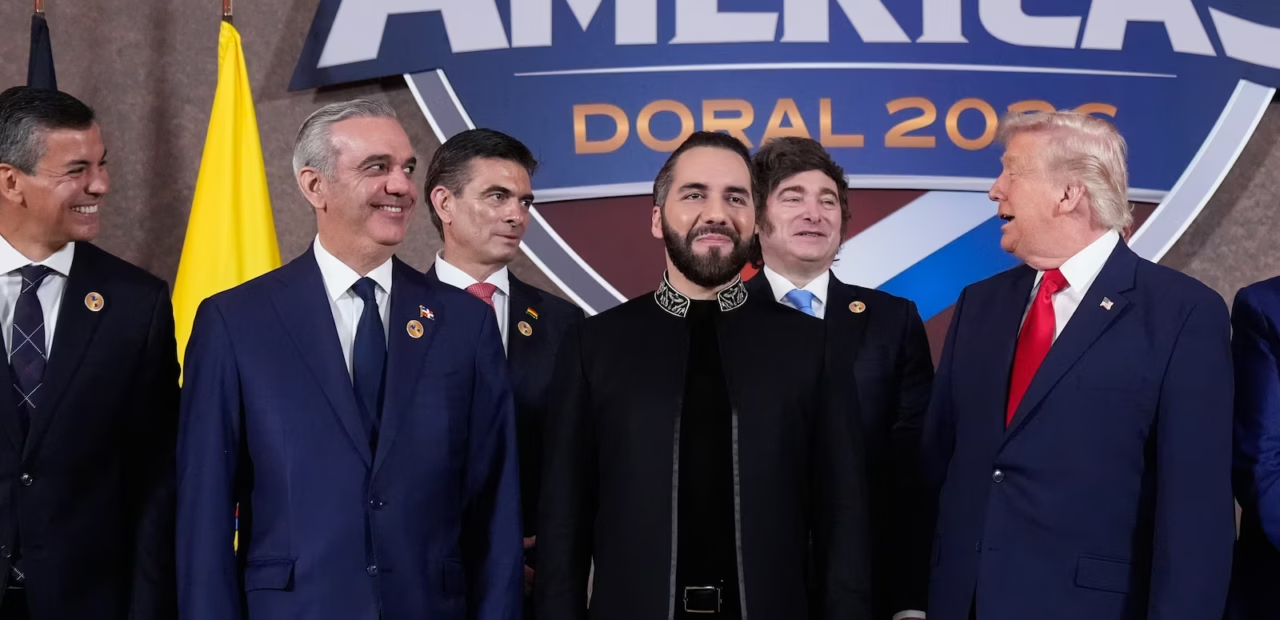
According to a single-source report from ABC News, a political backlash is brewing in Latin America as crime surges in some countries, creating conditions for conservative populists to gain votes by promising strong-arm tactics. While homicide rates have broadly declined across the region compared to a decade ago, spikes in some nations and a regionwide rise in other crimes, particularly extortion, have fueled this shift. Candidates have adopted strategies popularized by El Salvador’s President Nayib Bukele, including heavy-handed security measures and anti-immigrant rhetoric, winning backing from U.S. President Donald Trump. Experts quoted in the article note that the public’s appetite for tough tactics has grown alongside shrinking confidence in state institutions and deepening ambivalence about democracy. The report highlights recent elections in Colombia, Peru, Costa Rica, Honduras, and Chile where conservative candidates have won or led polls on law-and-order platforms. However, the article also notes that hard-line ambitions have collided with the practicalities of governing complex, cash-strapped democracies, with some leaders struggling to fulfill campaign promises.
What’s reported
Homicide rates have broadly declined across Latin America compared to a decade ago, but spikes in some countries and a regionwide rise in extortion have created conditions for conservative populists.
El Salvador’s President Nayib Bukele’s security strategies have been adopted by conservative candidates in the region.
In Colombia, pro-Trump businessman Abelardo de la Espriella has topped polls ahead of a runoff election.
In Peru, extortion has increased fivefold in the past five years, and Keiko Fujimori advanced to a June 7 presidential runoff on a law-and-order platform.
Costa Ricans elected conservative populist Laura Fernández in February for her tough-on-crime platform.
Honduran businessman Nasry Asfura swept December’s election after Trump endorsed him.
Latin America and the Caribbean saw their combined average homicide rate drop by more than 5% in 2025 compared to 2024, with a median rate of about 17.6 per 100,000 people, per InSight Crime.
Drug-fueled killings increased in Peru, Colombia, and Ecuador; Ecuador saw a 31% year-on-year rise in homicides to 9,216.
Chile’s homicide rate rose by 30% from 2021 to 2022, peaking at 6.7 per 100,000, and kidnappings increased by nearly 180% over four years.
In Chile, conservative José Antonio Kast won December’s election with pledges to build a border wall, toughen prison conditions, and deport hundreds of thousands of migrants.
Ecuadorian President Daniel Noboa abandoned a promise to lock up gang leaders on barges and took until November to open a first mega-prison.
Nearly three months into Kast’s tenure, pollsters say the public cannot tell the difference between his security crackdown and that of his left-wing predecessor; his government has organized only two deportation flights.
Key figures
Nayib Bukele, President of El Salvador
Donald Trump, U.S. President
Enrique Roig, vice president of Human Rights First and former State Department official
Adam Isacson, director for defense oversight at the Washington Office on Latin America
Abelardo de la Espriella, Colombian businessman and candidate
Keiko Fujimori, Peruvian presidential candidate
Laura Fernández, Costa Rican president
Nasry Asfura, Honduran businessman and president
José Antonio Kast, Chilean president
Gabriel Boric, former Chilean president
Daniel Noboa, Ecuadorian president
Beatriz García Nice, policy analyst for the Stimson Center
Eduardo Moncada, director of the Institute of Latin American Studies at Columbia University
Jeannette Jara, progressive in Chile
Roberto Sánchez, Peruvian nationalist candidate
Yamandú Orsi, Uruguayan president
Pedro Castillo, former Peruvian president
Sources: abcnews.com