



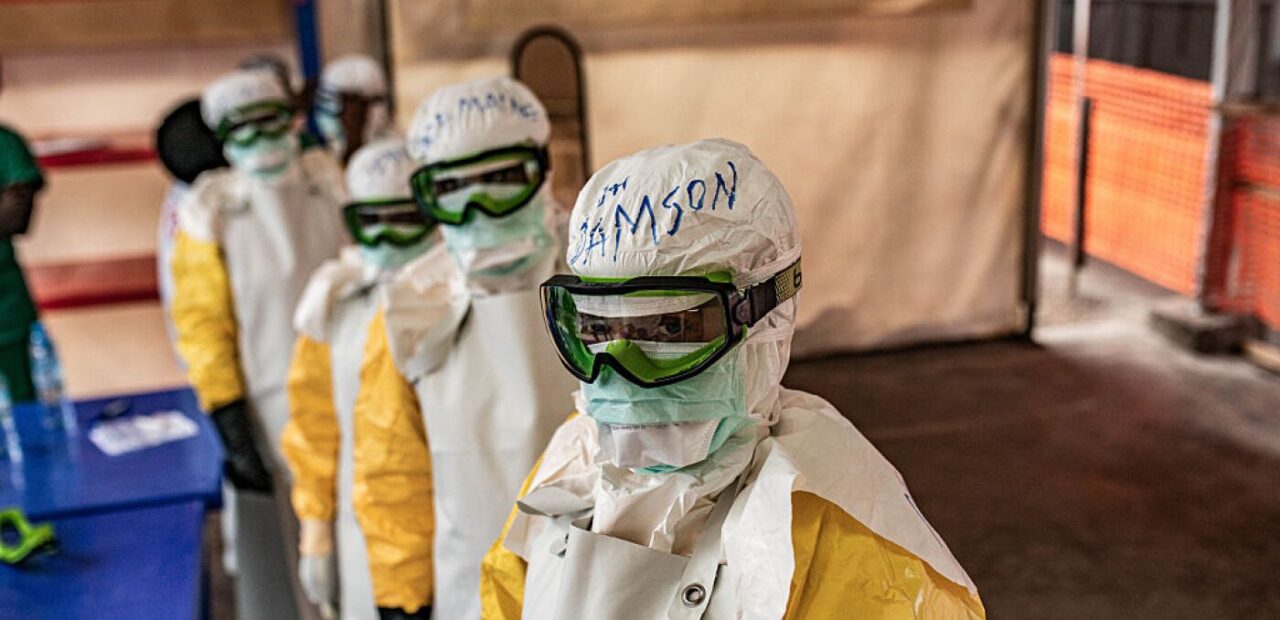
CDC Projects Ebola Outbreak Could Reach 20,000 Cases Without Strong Response

7 verified4 unconfirmed
New modeling from the U.S. Centers for Disease Control and Prevention warns that the ongoing Ebola outbreak in Central Africa could grow to 20,000 cases or more within the next three months unless large-scale public health interventions are implemented. The projections, released Friday, outline scenarios ranging from 10,000 to more than 20,000 cases depending on how quickly infected people are isolated. The World Health Organization declared the outbreak a global health emergency in May. Both Democratic Republic of Congo and Uganda are racing to contain the spread, but efforts have been complicated by armed conflict and population displacement. CDC officials emphasized that the risk to the general U.S. population remains low for now, though that could change if the virus reaches major international hubs. Experts stress that rapid identification and isolation of cases are critical to limiting the outbreak’s scale.
What’s verified
CDC models project the Ebola outbreak could reach 20,000 cases and 4,000 deaths in the next three months if only 20% of infected people are isolated quickly.
If 70% of cases are isolated within two days of symptom onset, there is a 94% probability of limiting the outbreak to fewer than 10,000 cases.
The World Health Organization declared the outbreak an international health emergency in May.
The current outbreak involves a virus type (Bundibugyo ebolavirus) for which there are no specific treatments or vaccines.
The outbreak is occurring in areas affected by armed conflict, including clashes between Congo’s government and the M23 rebel group, as well as attacks by the Allied Democratic Forces.
The CDC says the risk to the general U.S. population remains low, though it could rise if the outbreak spreads to urban international hubs.
The 2014–2016 West Africa Ebola outbreak, the largest on record, resulted in more than 28,000 reported cases.
Not yet confirmed
The exact number of confirmed cases and deaths is reported by a single source as about 400 cases and 63 deaths, citing the Africa CDC, but this figure is not confirmed by the other source.
The U.S. government has reportedly banned entry of non-U.S. passport holders and green-card holders who visited Congo, Uganda, or South Sudan in the previous 21 days, and is funneling travelers from those countries through four receiving airports—this detail comes from a single source.
Whether the U.S. response has been hampered by the dismantling of USAID and CDC funding cuts is mentioned by only one source.
Whether the virus may have been circulating since February but was initially tested for a different Ebola strain is reported by only one source.
Key figures
Jason Asher, CDC Center for Forecasting and Outbreak Analytics
Satish Pillai, CDC Ebola response incident manager
Jennifer Nuzzo, director of the Pandemic Center at Brown University School of Public Health
Justin Lessler, epidemiologist at University of North Carolina
Jeremy Konyndyk, president of Refugees International
Sources: NPR, statnews.com