



Brain circuits found to control job assignments in honeybees

8 reported
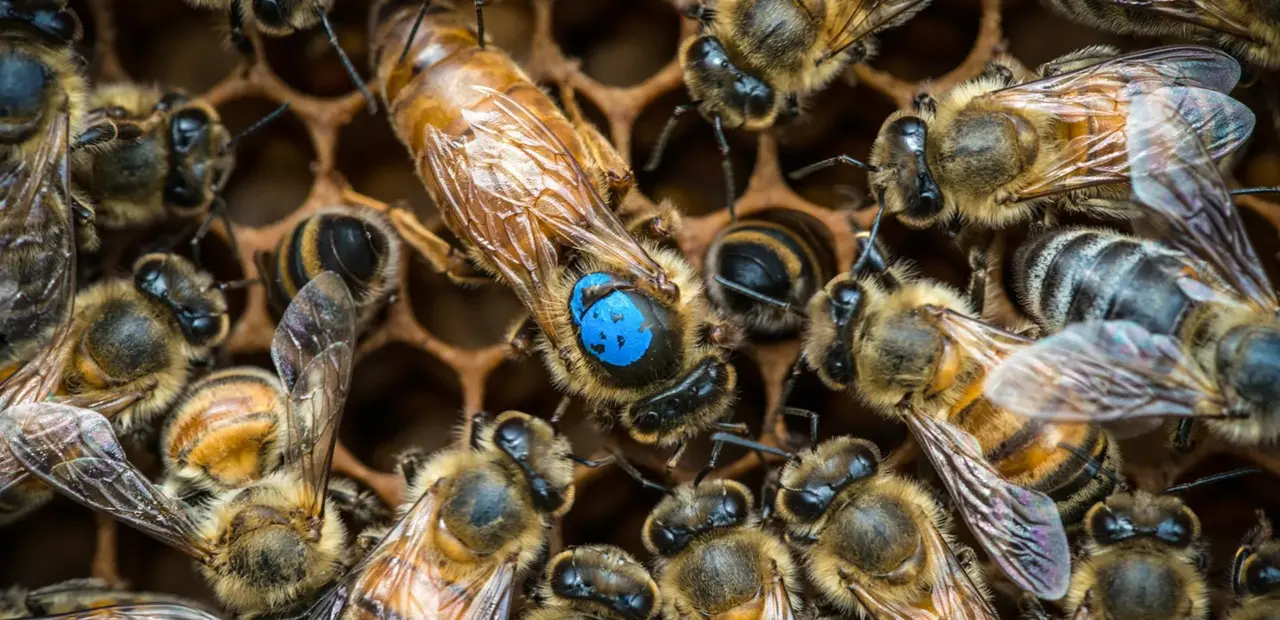
Researchers from Heinrich Heine University Duesseldorf, the University of Cologne, and the University of Frankfurt/Main have identified brain circuits that help determine which tasks worker bees perform as they age. The scientists found that manipulating a gene called doublesex and selectively reducing activity in certain neural circuits could change bee behavior. When those circuits were switched off in older worker bees, the insects resumed caring for the queen, a task normally performed only by younger bees. The findings, published in the journal Proceedings of the National Academy of Sciences, suggest that a bee colony’s division of labor is guided by neural switches inside each bee’s brain. The study provides early evidence that communication between neural circuits influences whether a bee nurses the queen, guards the hive, or searches for food. The research was led by Professor Dr. Martin Beye of the Institute of Evolutionary Genetics at HHU.
What’s reported
Researchers from Heinrich Heine University Duesseldorf, the University of Cologne, and the University of Frankfurt/Main conducted the study.
The study was published in the journal Proceedings of the National Academy of Sciences (PNAS).
A gene called doublesex was found to play a role in controlling age-related work behavior in worker bees.
When the doublesex gene was deactivated in older worker bees, they began caring for the queen again, a task normally done by younger bees.
The researchers selectively silenced neurons associated with doublesex by using the gene to produce a protein that suppresses neural activity, activated by feeding bees a particular substance.
Once those circuits were inhibited, older workers returned to caring for the queen instead of performing duties expected at their age.
Dr. Jana Seiler is the lead author of the PNAS study.
Professor Dr. Martin Beye of the Institute of Evolutionary Genetics at HHU led the team.
Key figures
Professor Dr. Martin Beye, Institute of Evolutionary Genetics, Heinrich Heine University Duesseldorf
Dr. Jana Seiler, lead author of the PNAS study
Sources: ScienceDaily