


Blue Origin New Glenn Rocket Explodes During Static Fire Test at Cape Canaveral

The Story
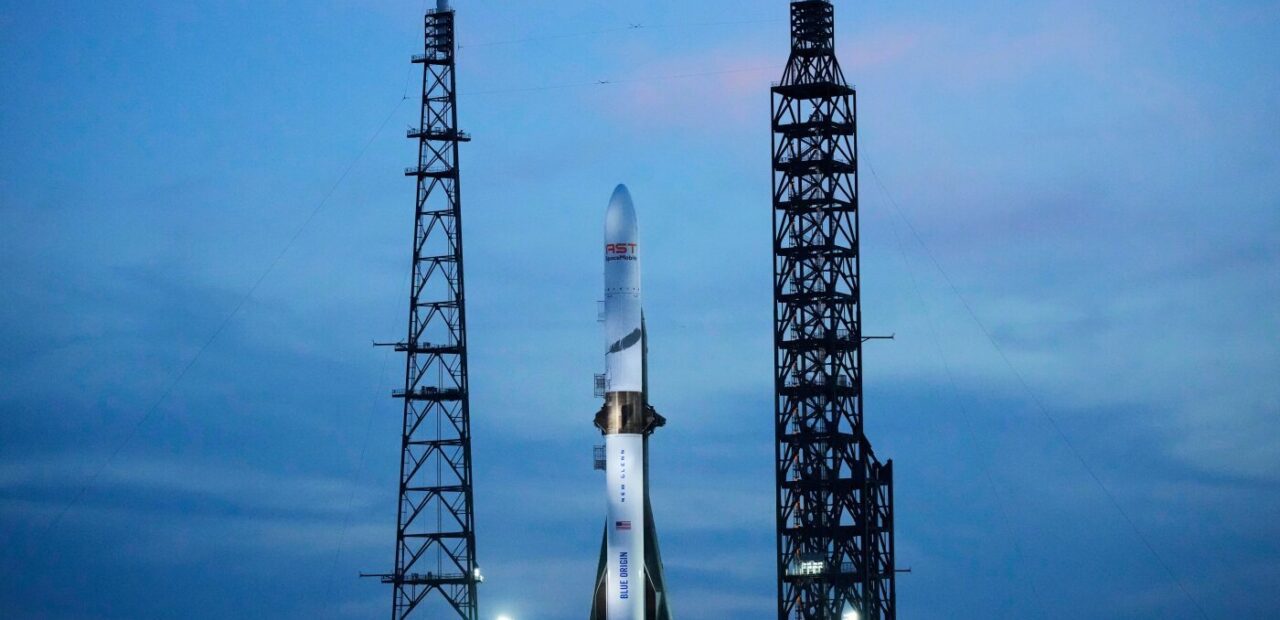
Blue Origin’s New Glenn rocket exploded during a static fire test at Cape Canaveral, Florida, on Thursday evening, May 28, 2026. The explosion occurred at approximately 9 p.m. local time while the rocket’s seven BE-4 engines were being ignited on the launch pad. No injuries were reported, but the blast caused significant damage to the launch complex and shook nearby homes.
Key Facts
- The explosion occurred during an engine-firing (static fire) test at Launch Complex 36A at Cape Canaveral Space Force Station in Florida.
- No one was injured in the incident.
- Blue Origin founder Jeff Bezos said on X: “It’s too early to know the root cause but we’re already working to find it. Very rough day, but we’ll rebuild whatever needs rebuilding and get back to flying. It’s worth it.”
- The explosion caused extensive damage to the launch pad, which is Blue Origin’s only launch pad for the New Glenn rocket.
- The New Glenn rocket was being prepared to carry internet satellites for Amazon’s Project Kuiper (Leo constellation) into low-Earth orbit.
- NASA Administrator Jared Isaacman commented on X: “Spaceflight is unforgiving, and developing new heavy-lift launch capability is extraordinarily difficult.”
- SpaceX CEO Elon Musk offered condolences via X: “Sorry to see this, I hope you recover quickly.”
Conflicting Reports
- The height of the New Glenn rocket is reported as 321 feet (98 meters) by NPR and as 322 feet by The Verge. Ars Technica does not specify the height.
- The exact timeline for when the rocket was scheduled to launch the satellites is reported only by NPR, which states the launch was planned for “next week.” The Verge does not specify a launch date for that mission.
Still Unclear
- The root cause of the explosion has not been determined. (All sources)
- NPR reports that this was only the third flight of the New Glenn rocket model, and that the rocket was grounded in April after a previous engine failure left a satellite in the wrong orbit. (Single-source claim from NPR)
- Ars Technica suggests the explosion may be the most dramatic since the Soviet Union’s N1 rocket explosion in 1969. (Single-source claim from Ars Technica)
- The Verge, citing Ars Technica senior space editor Eric Berger, reports that New Glenn likely will not launch again in 2026 and that a launch in early 2027 would be optimistic due to launch site concerns. (Single-source claim from The Verge/Ars Technica)
- NPR reports that Space Force officials said the explosion would not affect upcoming launches by other companies from other pads. (Single-source claim from NPR)
- The Verge states that the satellites for Amazon’s Leo constellation were not on board the rocket that exploded. (Confirmed by Verge but not mentioned by other sources; single-source claim)
- It is unclear how long repairs to the launch pad will take. (Not specifically answered by any source)
Misconceptions
No widespread misconceptions addressed in the sources.
Key Figures
- Jeff Bezos, founder of Blue Origin
- Jared Isaacman, NASA Administrator
- Elon Musk, CEO of SpaceX
- Eric Berger, senior space editor at Ars Technica (quoted by The Verge)
Sources: NPR, Ars Technica, The Verge