



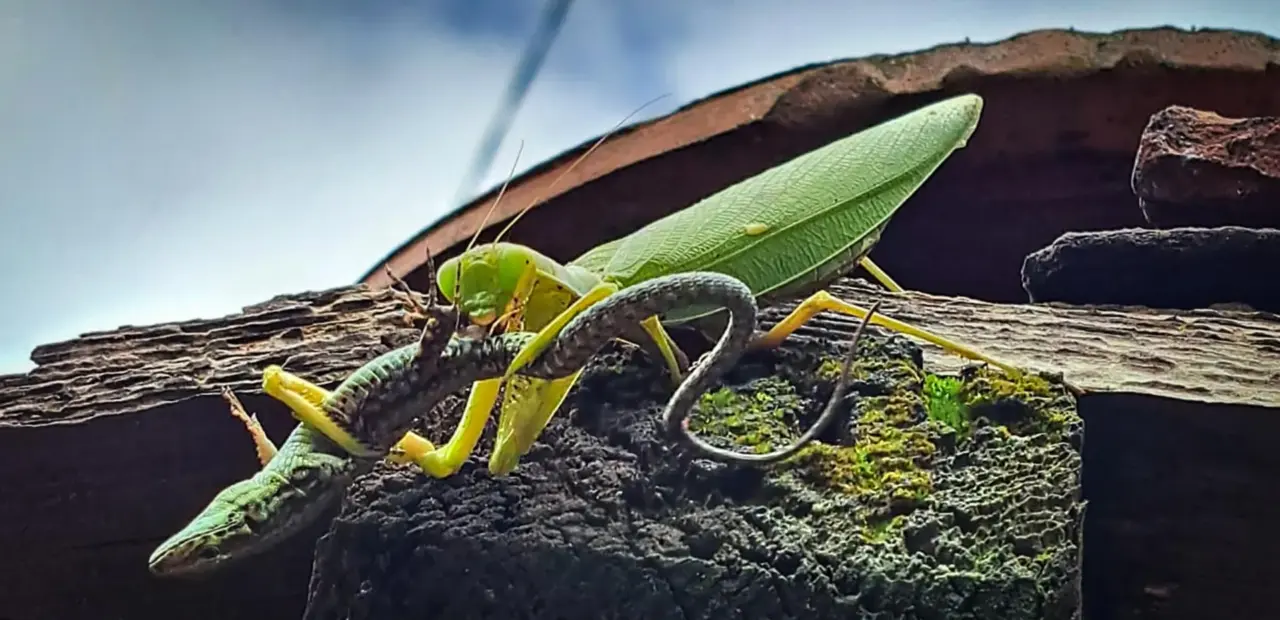
Asian mantises classified as invasive in Europe, study warns

8 reported
A new study has formally designated two Asian praying mantis species, Hierodula tenuidentata and Hierodula patellifera, as Invasive Alien Species in Europe, according to research published in the Journal of Orthoptera Research. The study, led by Roberto Battiston of the Museum of Archaeology and Natural Sciences "G. Zannato," examined how these insects are affecting European ecosystems. The mantises have been present in Europe for roughly a decade, but their populations have increased dramatically in recent years throughout Mediterranean and continental regions. Researchers say the insects are expanding northward, aided by climate change and urban environments. The invasive females attract native male mantises, which are eaten during mating attempts, and they feed on native insects, pollinators, and small vertebrates. The study also found that domestic cats are the leading vertebrate predator of these mantises, accounting for 45% of recorded positive predation events. Researchers have turned to citizen science, collecting over 2,300 reports from the public to monitor and raise awareness about the spread.
What’s reported
Two Asian mantis species, Hierodula tenuidentata and Hierodula patellifera, have been formally classified as Invasive Alien Species in a study published in the Journal of Orthoptera Research.
The study was led by Roberto Battiston of the Museum of Archaeology and Natural Sciences "G. Zannato."
The mantises have been present in Europe for roughly a decade, with populations increasing dramatically in recent years.
Each egg case produces an average of about 200 young, nearly twice as many as the native European mantis (Mantis religiosa).
Invasive females attract native male mantises, which are eaten during mating attempts.
The mantises feed on native animals including honeybees, tree frogs, and lizards.
Domestic cats account for 45% of recorded positive predation events on these mantises.
Researchers collected over 2,300 citizen science reports from the public.
Key figures
Roberto Battiston, researcher at the Museum of Archaeology and Natural Sciences "G. Zannato"
William di Pietro, colleague and citizen science project coordinator (GRIO)
Antonio Fasano, colleague and citizen science project coordinator (GRIO)
Sources: ScienceDaily