


Venus flytrap snap mechanism revealed by scientists

8 reported
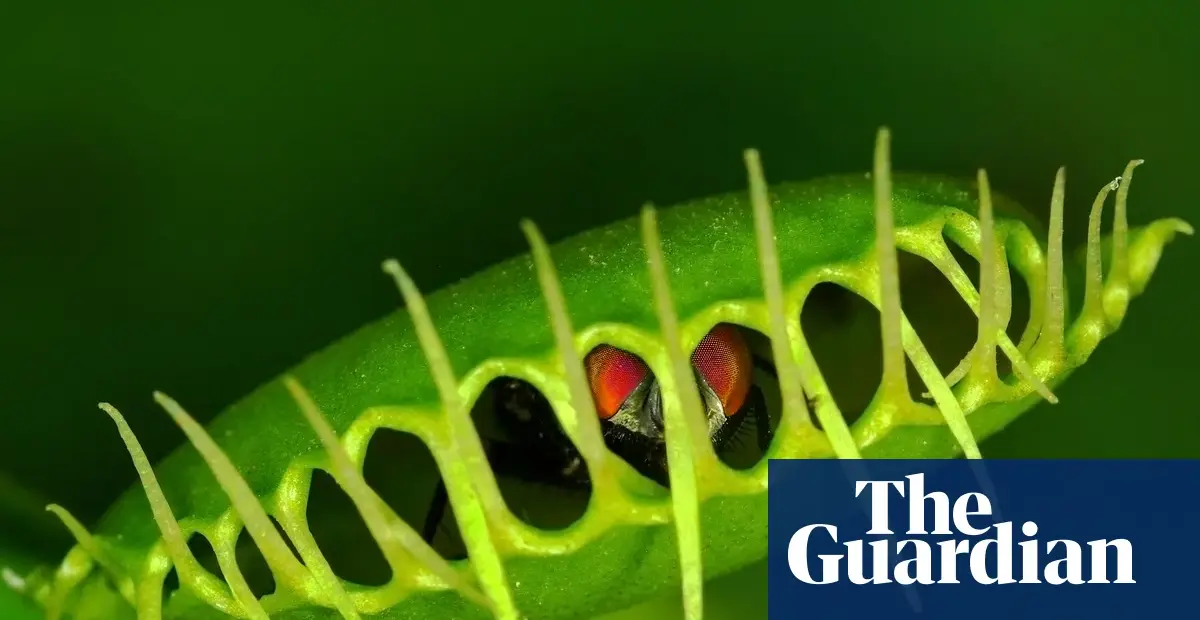
Scientists have identified the mechanism behind the Venus flytrap’s rapid leaf closure, solving a puzzle that stumped Charles Darwin. Researchers found that a hair-trigger detection causes cells on the outer surface of the leaf to soften, prompting the trap to close within a second of an insect landing. The study, published in the journal Science, used a device called a nanoindenter to measure leaf pressure. Measurements showed the leaf’s outer surface softened immediately after activation, due to cells becoming more flexible rather than water movement. The mechanism is similar to a dome-shaped rubber popper toy flipping when placed on a surface. The research was led by Dr Yoël Forterre, a physicist at the French National Centre for Scientific Research (CNRS) and Aix-Marseille University.
What’s reported
The Venus flytrap’s leaf closes within a second of a bug landing on it.
A hair-trigger detection causes cells on the outer surface of the leaf to soften.
The study used a nanoindenter to poke the leaf’s outer surface and measure pressure.
The leaf’s outer surface softened immediately after the trap was activated.
The softening was due to cells becoming more flexible, not water movement.
The mechanism is similar to a dome-shaped rubber popper toy flipping.
The findings are published in the journal Science.
Dr Yoël Forterre is a physicist at CNRS and Aix-Marseille University and senior author.
Key figures
Dr Yoël Forterre, physicist at the French National Centre for Scientific Research (CNRS) and Aix-Marseille University, senior author of the research.
Sources: The Guardian