



Debate grows over U.S. Ebola quarantine center in Kenya

12 reported2 unconfirmed
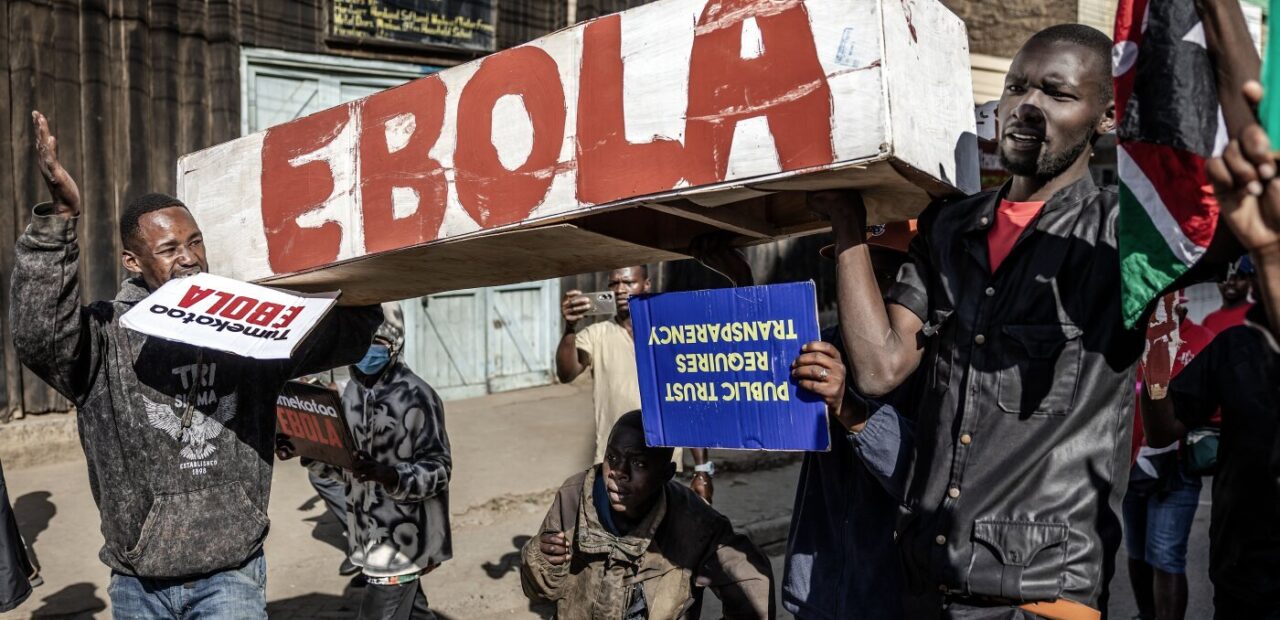
Protests erupted for a second time in two weeks in Nanyuki, Kenya, over a U.S. quarantine facility being set up on an air base. The facility is intended to quarantine American citizens who have had high-risk exposure to Ebola in the Democratic Republic of Congo, South Sudan, or Uganda. Many Kenyans complain their government has not been fully transparent about the center, worrying it might bring the virus into the country. Secretary of State Marco Rubio initially said the facility’s purpose was to prevent Ebola from entering the United States, but later called that statement a “misunderstanding,” noting Americans could return to the U.S. for treatment if sick. The Kenyan government has approved the facility, but a high court has ruled against it following a lawsuit from the Katiba Institute. Some Ebola specialists, including Nahid Bhadelia and Craig Spencer, have criticized the approach, arguing it does not make America safer and could jeopardize care for infected Americans. The State Department says no one who has had high-risk exposure has chosen to use the facility yet, and only one American has contracted Ebola so far.
What’s reported
Protests in Nanyuki, Kenya, occurred for a second time in two weeks over a U.S. quarantine facility.
The facility is for quarantining American citizens with high-risk Ebola exposure in DRC, South Sudan, or Uganda.
The U.S. has committed $13.5 million to Kenya for its own Ebola response.
Secretary of State Marco Rubio said on May 27 the facility’s goal is to prevent Ebola from entering the U.S., but later called that a “misunderstanding.”
The State Department said Kenya was selected due to proximity, limited airport capability, and timely assistance for Americans.
Police fired tear gas on protesters in Nanyuki; last week two protesters were fatally shot.
Kenyan President William Ruto approved the facility, citing a partnership with the U.S.
A high court in Kenya ruled against the facility after a lawsuit by the Katiba Institute.
Nahid Bhadelia, director of Boston University’s Center on Emerging Infectious Diseases, said the facility does not make America safer.
Craig Spencer, an emergency medicine physician and professor at Brown University, said the approach looks like “colonial decision making” and could jeopardize care for American health workers.
The State Department said individuals would volunteer for transport to the facility before becoming contagious, and would be monitored for 21 days.
Only one American has contracted Ebola so far; no one has chosen to use the facility yet.
Open questions
Whether the facility will offer treatments such as mechanical ventilation or continuous kidney dialysis; the State Department did not confirm this.
What consequences U.S. citizens face if they decline the facility’s assistance; the State Department did not elaborate.
Key figures
Secretary of State Marco Rubio
Kenyan President William Ruto
Nahid Bhadelia, director of Boston University’s Center on Emerging Infectious Diseases
Craig Spencer, emergency medicine physician and professor of public health at Brown University
Katiba Institute (Nairobi-based organization that brought the lawsuit)
Sources: NPR