



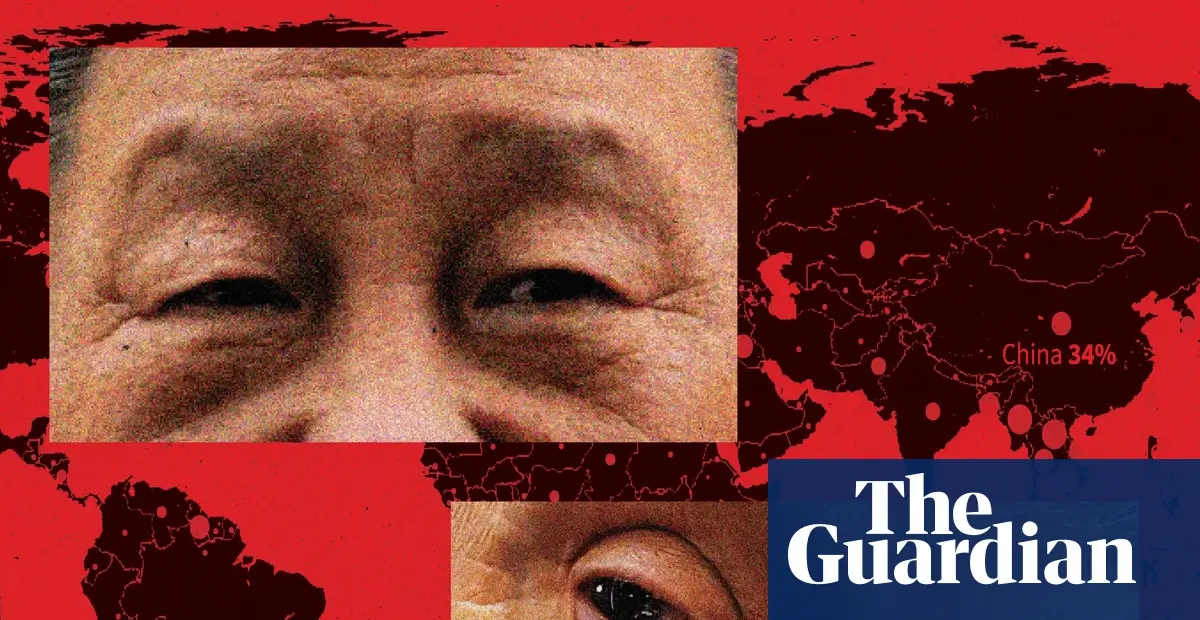
Guardian: Trump’s trade war strategy criticized as allies seek new ties

18 reported
According to a Guardian analysis, the global trade landscape is shifting as countries respond to tariffs imposed by former President Donald Trump since “Liberation Day” last year. The European Union has signed a trade agreement with South America’s Mercosur bloc, while China and Southeast Asian nations deepened their trade pact, and Canadian Prime Minister Mark Carney traveled to Beijing seeking closer ties. The article states that global trade will be shaped by an imperative to stop China’s export dominance and its control over strategic inputs like pharmaceutical components, critical minerals, and essential chips. The United States remains China’s main opponent, but other countries are evaluating tariffs, subsidies, and export controls. The analysis warns that the trade war will raise consumer prices, increase costs for manufacturers using Chinese inputs, and potentially lock US and other exporters out of China’s market. It notes that China has previously leveraged its dominance in critical commodities to cut off supplies in retaliation, citing a 2010 rare earths export cut to Japan and recent restrictions on magnets and minerals over Taiwan statements. The article criticizes Trump’s approach as “scattershot protectionism” with no discernible strategy, and suggests the next US administration should bring strategic thinking to the conflict.
What’s reported
The European Union signed a trade agreement with South America’s Mercosur bloc that had been pending for years.
China and Southeast Asian nations deepened their trade agreement.
Canadian Prime Minister Mark Carney traveled to Beijing hoping to build closer ties.
China accounts for about a third of the world’s manufacturing output, up from about 5% in 1995.
China’s share of global manufacturing exports rose from 3% to 20% over the same period.
China accounts for over 50% of global exports of hundreds of manufacturing products.
China’s current account surplus is officially 3.8% of GDP, but up to 5% according to some analysts.
In 2010, China cut exports of rare earths to Japan after Japan captured the captain of a Chinese trawler near disputed islands.
Earlier this year, China punished Tokyo for statements on Taiwan by curtailing supply of magnets and minerals.
Last year, Beijing forced the Dutch government to walk back its takeover of chip maker Nexperia by blocking chip exports from Nexperia’s plant in Dongguan.
China tightened restrictions on exports of rare earths and magnets to force the Trump administration to dial back its trade war.
The European Commission has 50 ongoing antidumping cases against Chinese imports, up from seven in 2024.
Europe has imposed duties or tariffs on Chinese EVs, solar supply chains, glass fibers, steel cylinders, and more.
Mexico last year imposed a tariff of up to 25% on imports from countries with which it does not have a trade agreement, aimed directly at China.
The World Trade Organization reports more than 300 antidumping investigations since 2020 by low- and middle-income countries against Chinese exports.
In a 2020 speech, President Xi Jinping argued that “we must tighten international production chains’ dependence on China, forming a powerful countermeasure and deterrent capability against foreigners who would artificially cut off supply.”
Trade economist Chad Bown, co-author of “How to Win a Trade War,” said of China: “They don’t want interdependence, they want everybody to depend on them.”
Jason Furman, who chaired the US Council of Economic Advisers under President Obama, noted that Beijing may be aiming for “maximizing your geopolitical dominance; not the economic welfare of your citizens.”
Key figures
Donald Trump, former US president
Mark Carney, Canadian prime minister
Xi Jinping, Chinese president
Jason Furman, former chair of the US Council of Economic Advisers under President Obama
Chad Bown, trade economist and co-author of “How to Win a Trade War”
Cecilia Malmström, Peterson Institute for International Economics
Sources: The Guardian