


Goethe’s amber collection yields 40-million-year-old ant fossil

8 reported
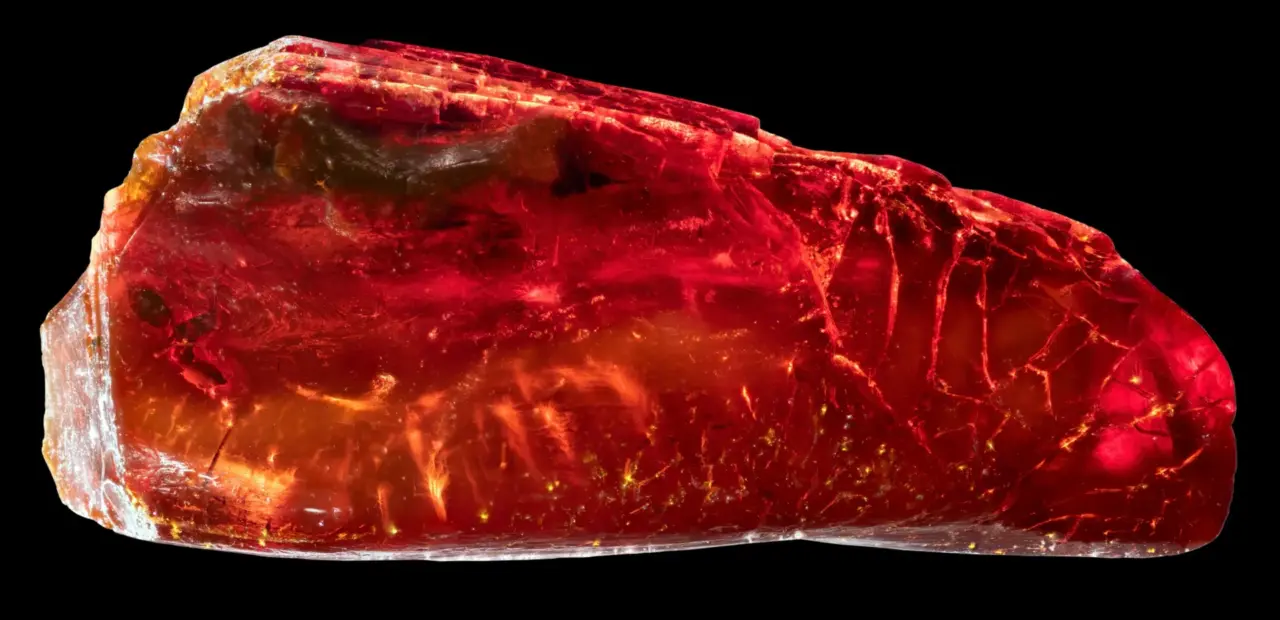
Scientists examining amber from the personal collection of German writer Johann Wolfgang von Goethe have discovered three hidden fossil insects, including an extinct ant preserved in extraordinary detail. The amber pieces, now housed at the Goethe National Museum and managed by the Klassik Stiftung Weimar, were never polished, making the fossils nearly invisible to the naked eye. Researchers from the University of Jena used synchrotron micro computed tomography at the German Electron Synchrotron (DESY) in Hamburg to create detailed three-dimensional images. The scans revealed a fungus gnat, a black fly, and an ancient ant belonging to the extinct species †Ctenobethylus goepperti. Because of the specimen’s exceptional preservation, scientists were able to examine fine body hairs and internal skeletal structures within the head and thorax. The research team also produced a complete digital reconstruction of the fossil, which is available online. Comparisons with the modern ant genus Liometopum suggest the ancient ants likely built large nests in trees. Goethe owned the amber specimens but showed relatively little interest in amber beyond its optical properties, even grinding lenses from fossilized resin for his work on color theory.
What’s reported
Scientists discovered three hidden fossil insects in Goethe’s amber collection: a fungus gnat, a black fly, and an extinct ant.
The ant belongs to the extinct species †Ctenobethylus goepperti.
Researchers used synchrotron micro computed tomography at DESY in Hamburg to create 3D images.
The scans revealed fine body hairs and internal skeletal structures in the ant’s head and thorax.
A complete digital 3D reconstruction of the fossil is available online.
Comparisons with the modern ant genus Liometopum suggest the ancient ants likely built large nests in trees.
Goethe’s amber collection contains 40 pieces of Baltic amber, housed at the Goethe National Museum.
Goethe ground lenses from fossilized resin to study color effects for his work on color theory.
Key figures
Johann Wolfgang von Goethe (German writer, original owner of the amber collection)
Bernhard Bock (Phyletisches Museum, University of Jena)
Daniel Tröger (University of Jena)
Sources: ScienceDaily