



Nuclear fireball simulation reveals unexpected fallout formation details

6 reported
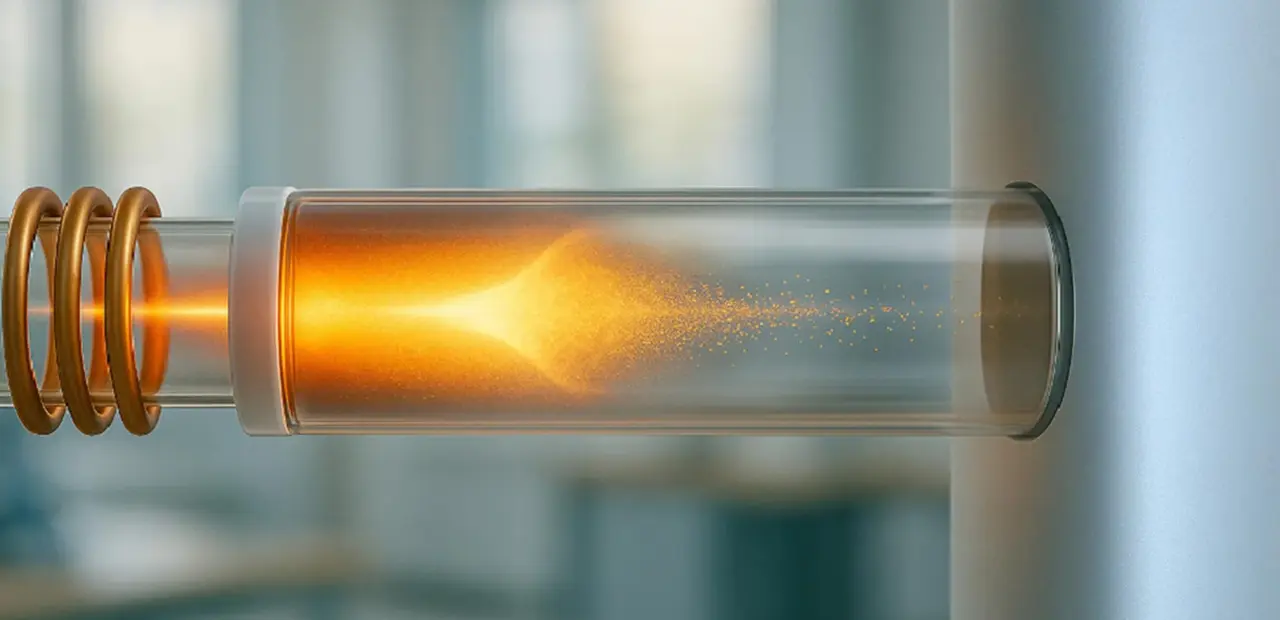
Scientists at Lawrence Livermore National Laboratory (LLNL) recreated part of the environment inside a nuclear fireball to study how radioactive fallout forms, according to a study published in Analytical Chemistry. The experiments showed that the cooling process of vaporized materials can significantly alter the particles that form, particularly for volatile elements like cesium. The team used a plasma flow reactor to mimic fireball conditions, exposing uranium, cerium, and cesium to different cooling scenarios. Results indicated that cesium condensed much later than other elements and mixed more extensively with uranium and cerium when kept at high temperatures longer. The findings suggest some widely used fallout models may overlook important chemical interactions during particle formation. The researchers plan to expand the work by studying more realistic material mixtures.
What’s reported
The study was conducted by scientists at Lawrence Livermore National Laboratory (LLNL) and published in Analytical Chemistry.
The team used a plasma flow reactor to simulate part of a nuclear fireball environment.
Materials tested were uranium, cerium, and cesium, each with different condensation behaviors.
Cesium condensed later than uranium and cerium and mixed more extensively when kept at high temperatures longer.
The results indicate that some existing fallout models may not fully account for chemical interactions between elements during cooling.
The researchers plan to study more realistic material mixtures in future work.
Key figures
Rakia Dhaoui, LLNL scientist and author of the study
Emily N. Weerakkody, co-author
Timothy P. Rose, co-author
Batikan Koroglu, co-author
Enrica Balboni, co-author
Sources: ScienceDaily