



New Federal Rule Outlines Medicaid Work Requirement Exemptions for States

8 verified3 unconfirmed
The federal government issued new guidance on Monday detailing how states must implement Medicaid work requirements that are set to take effect in January. The requirements, part of a 2025 reconciliation law, apply to adults in the Medicaid expansion population and mandate 80 hours per month of work, school attendance, or volunteering. Exemptions are available for those who are considered “medically frail,” pregnant, postpartum, or parents of a child under age 14. The rule closely follows exemptions already in federal law and prohibits states from adding their own. States have sought clarification on how to determine medical frailty and other implementation details. The new rule allows temporary self-attestation for exemptions until 2028, after which documentation will be required. Critics point to a past Arkansas program where thousands lost coverage despite being eligible.
What’s verified
The Centers for Medicare and Medicaid Services (CMS) issued a new interim rule providing guidance on implementing Medicaid work requirements.
The work requirements were enacted as part of the 2025 reconciliation law, referred to as the One Big Beautiful Bill Act.
The requirements take effect in January 2027 and apply to adults in the Medicaid expansion population.
Beneficiaries must work, volunteer, or attend school for at least 80 hours per month to maintain coverage.
Exemptions include individuals who are “medically frail,” pregnant, postpartum, or parents of a child under 14.
States are prohibited from adding additional exemptions beyond those in federal law.
Self-attestation for exemptions is permitted temporarily, but after 2028 documentation will be required.
Critics cite the 2018 Arkansas work requirement program, where thousands of adults lost coverage despite many meeting the requirements or qualifying for exemptions.
Not yet confirmed
The exact number of people who could lose coverage due to the requirements remains uncertain. One estimate projects 3–7 million people could lose coverage, while another projects 4.8 million more uninsured by 2034.
It is unclear how many states have already begun implementation. One source reports that Nebraska became the first state to implement work requirements on May 1.
The specific details of a six-state coalition of Democratic governors requesting a slower rollout, including who was involved and their exact demands, are not confirmed by the other source.
Key figures
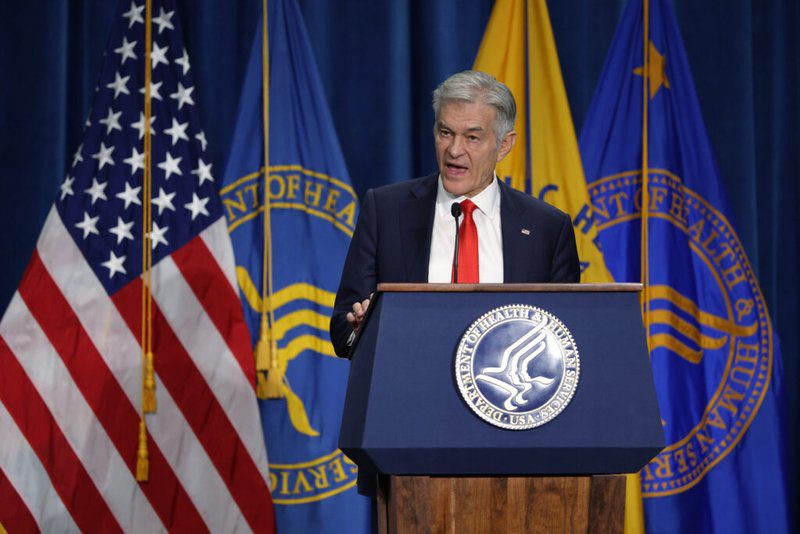
Dr. Mehmet Oz, director of the Centers for Medicare & Medicaid Services
Daniel Brillman, CMS deputy administrator and director of Medicaid and CHIP Services
Oregon Democratic Gov. Tina Kotek
Sources: stateline.org, rollcall.com