



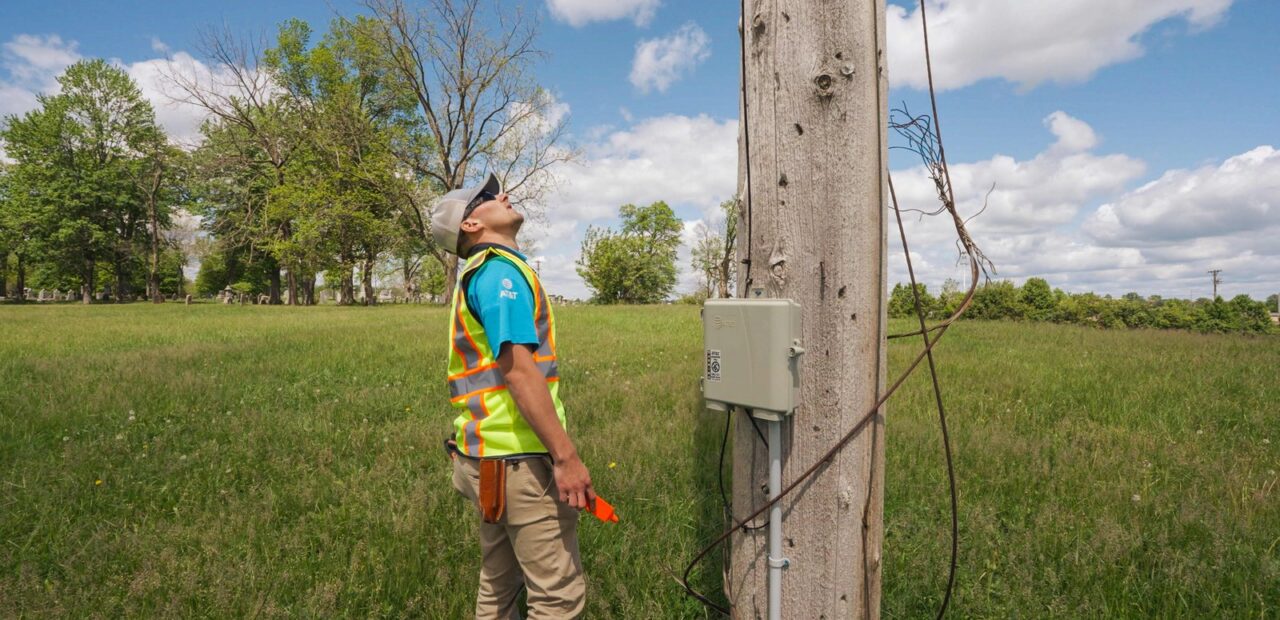
AI reshapes job market, boosting demand for skilled trades workers

A CNBC report outlines how the rapid spread of artificial intelligence is altering the U.S. labor market, with demand rising for blue-collar workers and hiring slowing for recent college graduates. AT&T CEO John Stankey said the company needs skilled technicians, electricians, and fiber workers to build and maintain infrastructure, but cannot find enough. The article notes that the average unemployment rate for college graduates ages 22 to 27 rose to about 5.4% in 2025, up from a historical average of 4.5%. Researchers found that early-career workers in AI-exposed roles such as software development and marketing saw 16% slower employment growth between mid-2024 and September 2025. Economists also reported a 9% drop in hiring for workers ages 22 to 24 in AI-exposed industries after the launch of ChatGPT in late 2022. Meanwhile, AT&T announced a $250 billion investment plan, with 15% allocated for hiring and training front-line blue-collar workers, and Nvidia CEO Jensen Huang predicted six-figure salaries for plumbers and electricians due to infrastructure needs.
What’s reported
AT&T CEO John Stankey said the company needs workers with skills in electricity, photonics, and fiber installation but cannot find enough.
Average unemployment for recent graduates (ages 22–27) was about 5.4% in 2025, compared to a historical average of 4.5% since 1990.
Stanford University research found early-career workers in AI-exposed roles saw 16% slower employment growth from mid-2024 to September 2025.
A U.S. Census Bureau economist found a 9% drop in hiring for workers ages 22–24 in AI-exposed industries after ChatGPT launched in late 2022, and a 12% to 15% decline in employment for those industries through mid-2025, resulting in about 150,000 fewer early-career jobs.
AT&T plans to invest $250 billion over five years, with about 15% for hiring and training blue-collar front-line workers.
Nvidia CEO Jensen Huang stated there is a “great shortage” of workers and that plumbers, electricians, and technicians will earn six-figure salaries.
Open questions
It is unclear how sustainable the blue-collar job boom will be once companies complete the expected wave of AI-fueled construction in coming years.
Some evidence suggests the decline in employment for young workers in AI-exposed industries may have started around 2020 and may not be fully attributable to AI.
Key figures
John Stankey, CEO of AT&T
May Hu, tech consultant and social media influencer, former Deloitte employee
Jensen Huang, CEO of Nvidia
Erik Brynjolfsson, economist at Stanford University
Lee Tucker, senior economist at the U.S. Census Bureau
Aaron Cheris, global head of retail practice at Bain & Company
Shannan Clark, associate professor of history at Montclair State University
Sources: CNBC