



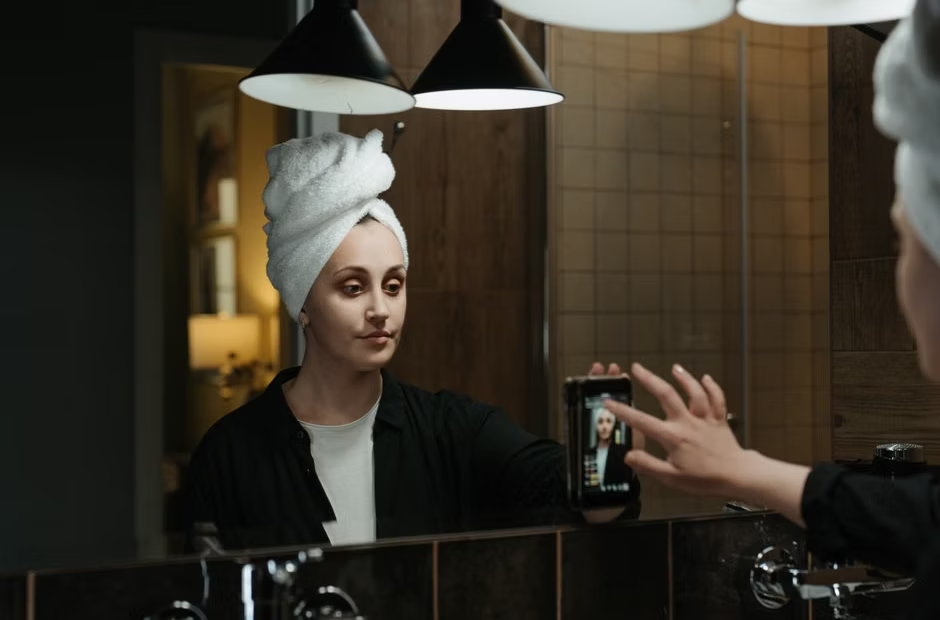
Google Introduces Selfie Video as New Account Login Option

5 verified3 unconfirmed
Google has announced a new feature allowing users to sign into their accounts by recording a selfie video, the company confirmed in a blog post on July 23, 2026. The option is designed to help users regain access if they are locked out or lack access to their usual device. Users must set up the feature ahead of time by recording a video while following guided head movements. When signing in later, they can take a new selfie video, which Google compares to the stored version to verify identity. Google states that the videos are stored with encryption and users can delete them at any time. The move comes as companies increasingly rely on biometrics over passwords to prevent fraud, though it raises questions about privacy and biometric data collection.
What’s verified
Google now lets users sign in to their accounts with a selfie video, announced on July 23, 2026.
The feature is intended as an alternative for users who are locked out or do not have their usual phone or computer.
Users must record a setup video, which is stored on Google’s servers and encrypted.
Google says the video can be deleted by the user at any time.
The option involves privacy concerns regarding facial data collection, a subject regulators have been scrutinizing.
Not yet confirmed
One source states that during setup users perform head movements (e.g., turning left/right, nodding) to capture multiple angles. The other source does not mention this.
One source notes that selfie videos can be used for age verification and AI avatar creation, and includes an optional toggle for Google to use the video to improve facial recognition technology. The other source does not mention these uses.
One source says the feature is not available for Workspace accounts, child accounts, or accounts in Google’s Advanced Protection Program. The other source does not include these restrictions.
Key figures
Google (company)
Sources: TechCrunch, Ars Technica