

Trump Conditions Saudi Nuclear Deal on Normalization with Israel

9 verified7 unconfirmed
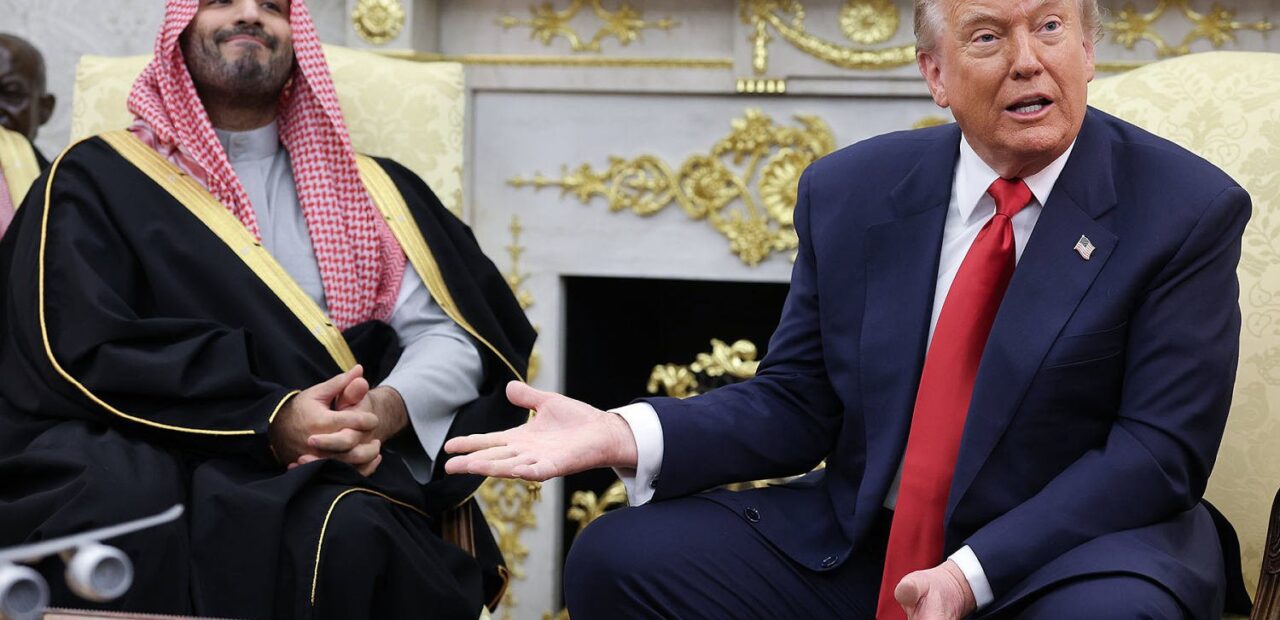
President Donald Trump stated on July 23 that a new U.S.-Saudi nuclear energy agreement is contingent on Saudi Arabia normalizing diplomatic relations with Israel. The deal was signed the previous day by Energy Secretary Chris Wright and Saudi Energy Minister Prince Abdulaziz bin Salman and still requires congressional review. Saudi Arabia has long insisted that normalization with Israel would only follow meaningful progress toward establishing a Palestinian state, a position at odds with the current Israeli government. Israeli Prime Minister Benjamin Netanyahu welcomed Trump’s condition, calling it a potential historic step for Middle East peace. The agreement has drawn criticism from nonproliferation experts and Israeli politicians who warn it could trigger a nuclear arms race in the region. The deal does not include a ban on uranium enrichment, and Saudi Crown Prince Mohammed bin Salman has previously stated the kingdom would seek nuclear weapons if Iran develops them first. The announcement comes amid ongoing military conflict between the United States and Iran.
What’s verified
President Trump stated on July 23 that a U.S.-Saudi nuclear energy deal requires Saudi Arabia to normalize relations with Israel.
The deal was signed on July 22 and is subject to review by the U.S. Congress.
Saudi Arabia has conditioned normalization with Israel on progress toward a Palestinian state.
Israeli Prime Minister Benjamin Netanyahu welcomed the condition of Saudi Arabia joining the Abraham Accords.
The agreement does not include a ban on uranium enrichment, raising proliferation concerns among critics.
Saudi Crown Prince Mohammed bin Salman has said the kingdom would pursue nuclear weapons if Iran develops them.
The United Arab Emirates’ 2009 nuclear agreement with the U.S. included a provision forgoing enrichment; a clause allows renegotiation if a neighboring country receives more favorable terms.
Critics warn the deal could spark a nuclear arms race in the Middle East.
The deal was announced amid ongoing U.S.-Iran military conflict.
Not yet confirmed
Trump’s online post stated there will be “no enrichment of material” under the agreement, while multiple sources report that the pact does not forbid enrichment and could allow a future enrichment facility; this specific claim appears in only one source.
Specific reactions from Israeli opposition figures Ehud Barak and Yair Lapid appear in only one source.
The rationale that the U.S. made the deal to compete with China and Russia for nuclear exports appears in only one source.
Details of Houthi attacks on Saudi oil tankers and Iranian missile strikes against U.S. bases appear in only one source.
Whether the deal includes a bilateral security protocol that does not require IAEA “additional protocol” inspections appears in only one source.
The time frame of 10-20 years for Saudi nuclear development stated by an expert appears in only one source.
The exact text of the agreement has not been publicly released.
Key figures
President Donald Trump
Saudi Crown Prince Mohammed bin Salman
Israeli Prime Minister Benjamin Netanyahu
Energy Secretary Chris Wright
Saudi Energy Minister Prince Abdulaziz bin Salman
White House press secretary Karoline Leavitt
Former Israeli defense minister Avigdor Lieberman
Former Israeli prime minister Ehud Barak
Israeli opposition leader Yair Lapid
Sen. Ed Markey (D-Mass.)
Secretary of State Marco Rubio
Steven Cook (Council on Foreign Relations)
Matthew Bunn (Harvard University)
Yoel Guzansky (Institute for National Security Studies)
Nour Eid (researcher)
James Dorsey (Rajaratnam School of International Studies)
Rosemary Kelanic (Defense Priorities Foundation)