



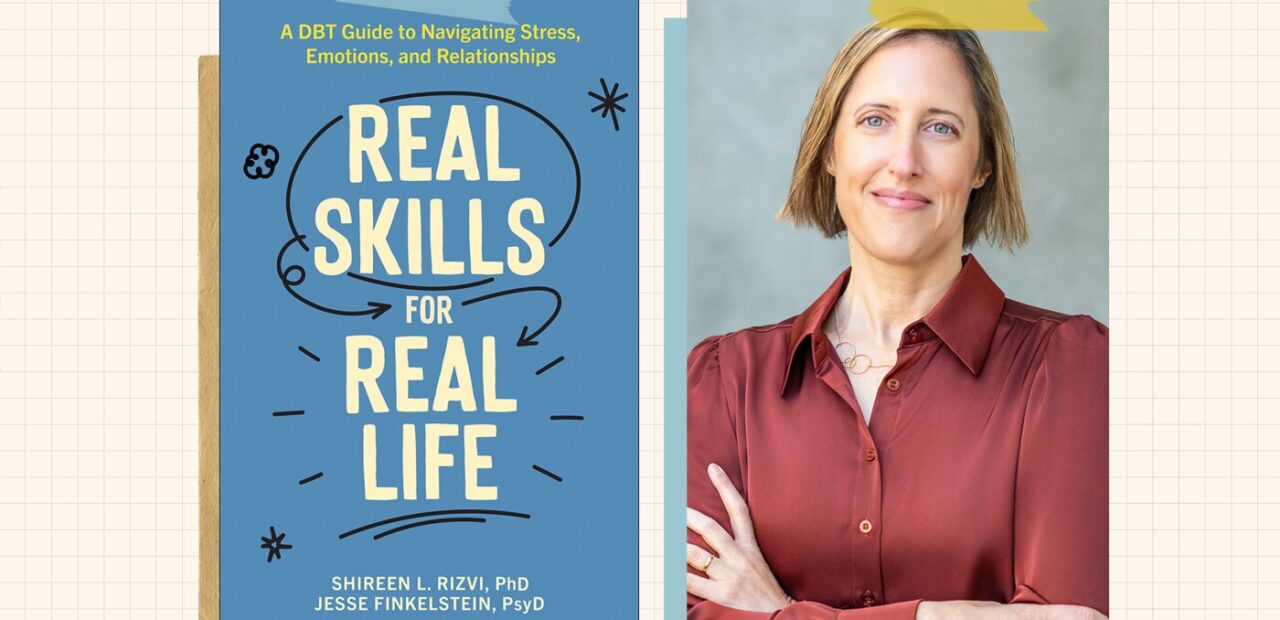
NPR reports TIP skills for managing distress

7 reported
NPR reports on a set of four skills called TIP, designed to help people lower emotional intensity when they are so distressed they cannot think straight. The skills are described by Shireen Rizvi, a professor of psychiatry and behavioral sciences at Montefiore Einstein Medical Center, in her book Real Skills for Real Life: A DBT Guide to Navigating Stress, Emotions, and Relationships, published earlier this year. Rizvi and co-author Jesse Finkelstein, a clinical psychologist, teach skills rooted in dialectical behavior therapy (DBT), a form of therapy first developed by psychologist Marsha Linehan in the 1980s. The TIP acronym stands for temperature, intense exercise, paced breathing and paired muscle relaxation. Rizvi notes that these skills can bring emotional intensity from extreme to moderate, such as from a 100 to an 80 on a scale from zero to 100. She also states that one common misconception about distress is that people believe they must get rid of the feeling immediately or it will last forever, but that intense feelings will pass.
What’s reported
The TIP skills are temperature, intense exercise, paced breathing and paired muscle relaxation.
The temperature skill involves plunging the face into cold water and ice to trigger the mammalian dive reflex, which slows heart rate and respiratory rate.
Rizvi does not recommend the temperature maneuver for those with a heart condition or those taking beta blockers.
The intense exercise skill involves getting the heart rate up quickly for 30 seconds or longer.
The paced breathing skill involves making the exhale longer than the inhale, such as breathing in for a count of four and out for a count of six.
The paired muscle relaxation skill involves tensing muscles as tight as possible, then releasing them while breathing out and saying or thinking a word associated with relaxation.
Rizvi states that one of the biggest things people get wrong about distress is that they have to get rid of the feeling right away or it will last forever.
Misconceptions
The article addresses the misconception that distress must be eliminated immediately or it will last forever; Rizvi states that intense feelings will pass.
Key figures
Shireen Rizvi, professor of psychiatry and behavioral sciences at Montefiore Einstein Medical Center, board-certified DBT therapist
Jesse Finkelstein, clinical psychologist, co-author
Marsha Linehan, psychologist who first developed DBT in the 1980s
Meghan Keane, editor of the story
CJ Riculan, visual editor
Sources: NPR