

Venezuela Quakes Most Powerful Since 1900, U.S. Pledges Major Aid

3 verified5 unconfirmed
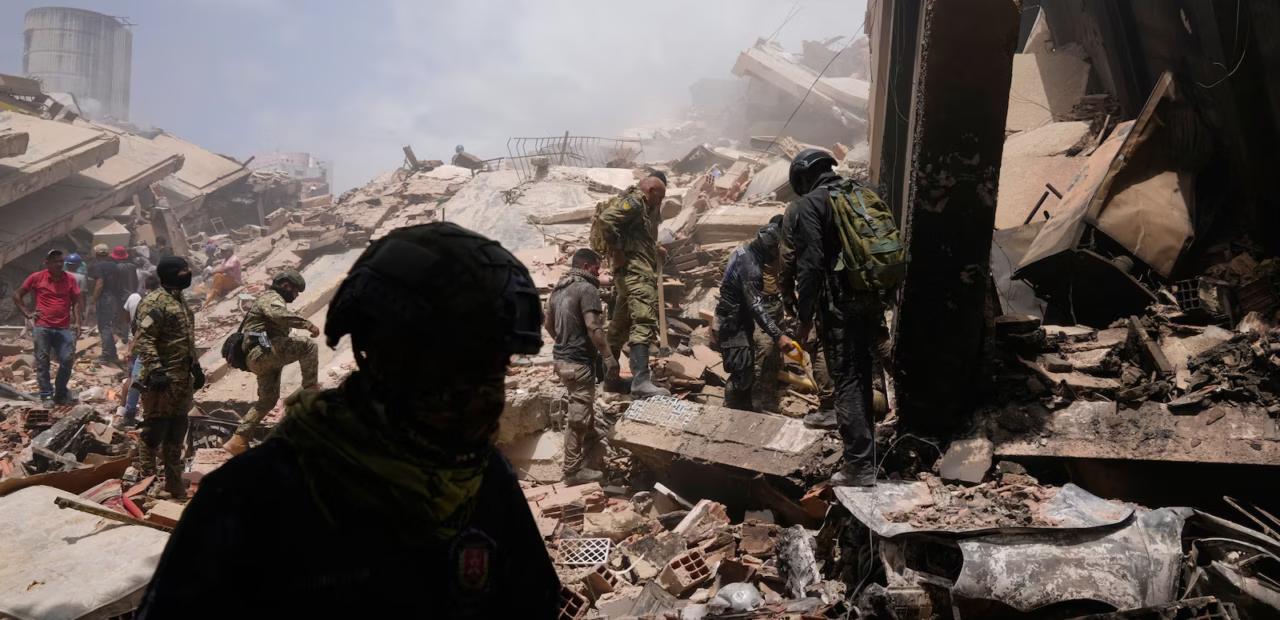
A series of powerful earthquakes struck Venezuela in late June 2026, with experts calling them the strongest to hit the country in more than a century. The back-to-back quakes caused widespread building collapses and severe damage, particularly in coastal areas. Engineers pointed to older construction, substandard building practices, and soft soils as factors that increased vulnerability. The United States announced a significant humanitarian response, including financial commitments to aid organizations and the deployment of search-and-rescue teams. The response marks a shift from previous U.S. disaster relief efforts, which had drawn criticism for being slow or small in scale. Local authorities and international aid groups are working to assess the full extent of destruction and meet urgent needs. The number of casualties is still expected to rise as rescue operations continue.
What’s verified
Venezuela experienced back-to-back earthquakes in late June 2026.
The earthquakes were the most powerful recorded in the country since 1900.
The quakes caused extensive building damage and significant casualties.
Not yet confirmed
A specific death toll of more than 900 has been reported by one source.
One analysis estimated that about a third of structures in the hard-hit city of Catia La Mar were damaged.
The U.S. response includes $150 million in aid to faith-based groups and U.N. agencies, plus two search-and-rescue teams, according to a single report.
The extent to which Venezuela’s building codes were enforced before the quakes remains unclear.
Whether the U.S. will sustain long-term recovery efforts beyond initial rescue operations is an open question.
Key figures
Marco Rubio, U.S. Secretary of State
David Cocke, structural engineer and former president of the Earthquake Engineering Research Institute
Eduardo Miranda, professor of civil and environmental engineering at Stanford University
Marcos Ferreira, geophysicist at the Geological Survey of Brazil
Juan Carlos Vielma, civil engineer at Pontifical Catholic University of Valparaíso, Chile
Jeremy Konyndyk, president of Refugees International and former USAID disaster response head
Cesar Jimenez, manager for Project Hope in Venezuela
Sources: abcnews.com, NPR