



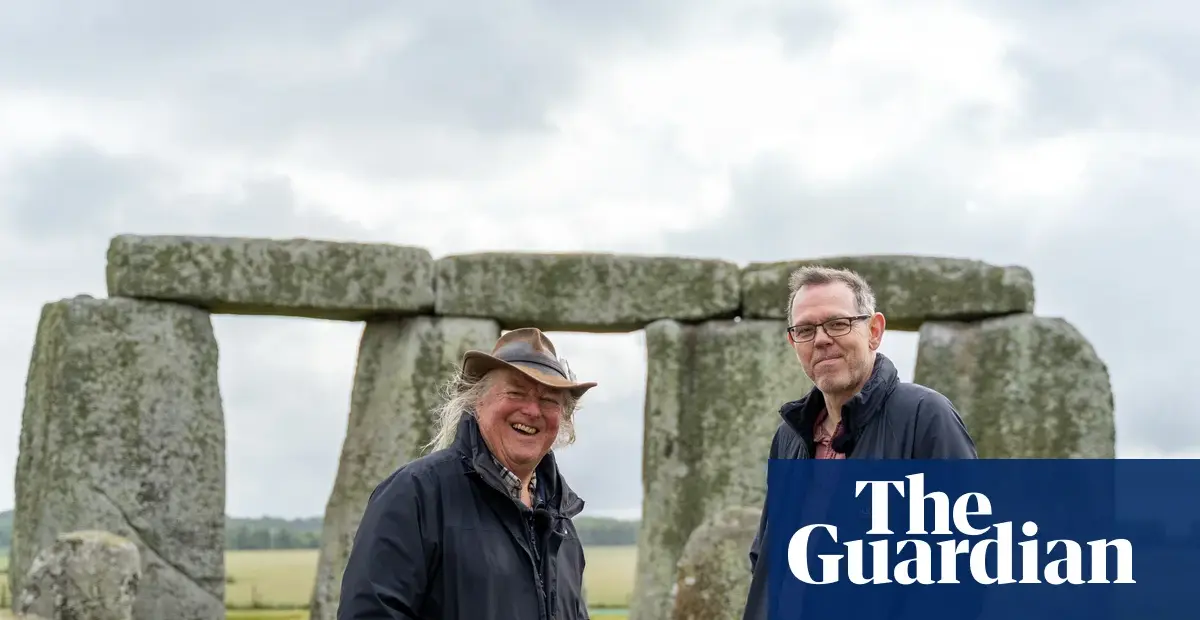
5,000-year-old solstice-aligned monument discovered near Stonehenge

10 reported
A 5,000-year-old monument aligned with the summer and winter solstices has been discovered near Stonehenge in Wiltshire, according to archaeologists who described it as a "once in a lifetime" find. The structure at Bulford, 5km from the world heritage site, has been carbon dated to around 3000BC, the same time as the earliest phase of Stonehenge construction. It is the earliest solstice-aligned structure in the Wiltshire landscape and one of the very first in Britain, experts stated. The monument consisted of two wooden poles 120 metres apart, leaving only two large post pits in the ground. Archaeologist Phil Harding, who led the dig for Wessex Archaeology, said he nearly missed the discovery and only recognized the solstice alignment during later analysis of the site plan. Further work by skyscape archaeologist Fabio Silva confirmed the poles accurately lined up with the midsummer sunrise and midwinter sunset in 2950BC, based on radiocarbon analysis. The team believes the poles stood 3-4 metres high and a smaller pit contained a disc-shaped flint knife that may have been shaped to represent the sun.
What’s reported
The monument at Bulford is 5km from Stonehenge in Wiltshire.
It has been carbon dated to around 3000BC, the same time as Stonehenge's earliest phase.
It is the earliest solstice-aligned structure in the Wiltshire landscape and one of the first in Britain.
The structure consisted of two wooden poles 120 metres apart, leaving two large post pits.
Archaeologist Phil Harding led the dig for Wessex Archaeology before construction of new Ministry of Defence housing.
Harding recognized the solstice alignment when drawing a line between the two larger postholes on the site plan.
Fabio Silva, a skyscape archaeologist, confirmed the poles aligned with midsummer sunrise and midwinter sunset in 2950BC.
The post pits were 1 metre deep, and the poles are believed to have stood 3-4 metres high.
A smaller pit contained a rare disc-shaped flint knife that may have been shaped to represent the sun.
Matt Leivers, senior research manager at Wessex Archaeology, said it is "inconceivable" that those at Bulford would have been unaware of those at Stonehenge, and they may have been the same people.
Key figures
Phil Harding, archaeologist who led the dig for Wessex Archaeology, former presenter on Channel 4's Time Team.
Fabio Silva, skyscape archaeologist and expert in ancient astronomical mapping.
Matt Leivers, senior research manager at Wessex Archaeology.
Sources: The Guardian