



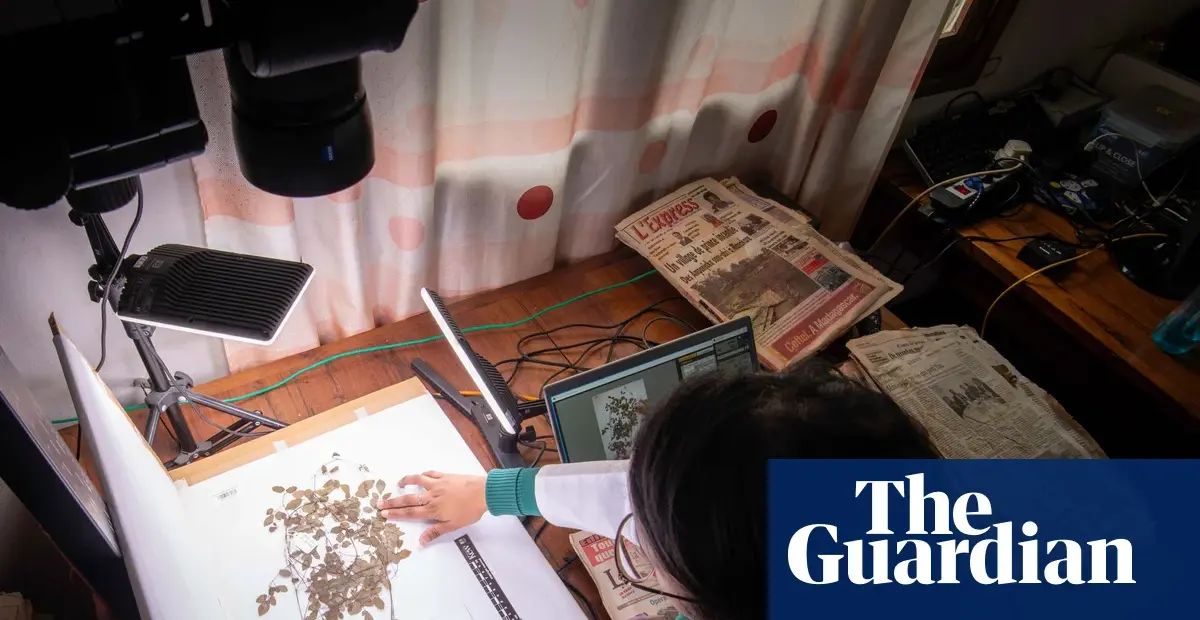
AI and digitisation may help botanists save endangered plants, report says

10 reported
A major report from Royal Botanic Gardens, Kew states that the rise of AI and digitisation could be a turning point in the “race against extinction” faced by botanists trying to identify and save vital plants before they vanish. New technology is enabling scientists to track how flowering times have shifted by weeks around the world, rapidly identify new specimens, and obtain genetic data from 180-year-old fungus specimens. The report notes that about 40% of the 70,000 plant species assessed are at risk of extinction, while another 330,000 have yet to be analysed, and an estimated 100,000 plant species remain unnamed. Prof Alexandre Antonelli, executive director of science at RBG Kew, said about 2,000 new plant species are recorded each year but this “barely scratches the surface.” The report also highlights that 90% of an estimated 2 million fungus species are unknown to science, and less than 1% of known fungus species have been assessed for extinction risk. RBG Kew has digitised all 7.4 million of its specimens, making them freely available online, but globally only 145 million digital specimens are online, less than 16% of the total held in herbariums. The report cautions that using digitisation and AI could amplify existing biases and inequalities unless underlying data is expanded and improved.
What’s reported
The report comes from Royal Botanic Gardens, Kew and involved 400 scientists across 40 countries.
About 40% of the 70,000 assessed plant species are at risk of extinction.
An estimated 100,000 plant species have yet to be named by scientists.
About 2,000 new plant species are recorded each year.
90% of an estimated 2 million fungus species are unknown to science; less than 1% of known fungus species have been assessed for extinction risk.
RBG Kew has digitised all 7.4 million of its specimens, including those collected by Charles Darwin.
A global study using an AI model trained to spot flowers analysed 8 million digitised specimens and found flowering has shifted by an average 2.5 days a decade over the last century.
Scientists can now produce high-quality genomes from fungus specimens up to 180 years old.
The report acknowledges concerns over heavy energy and water use by AI datacentres.
The report calls for partnerships between technology companies and environment organisations, and for governments and funders to invest in plant and fungus collections.
Key figures
Prof Alexandre Antonelli, executive director of science at RBG Kew
Landy Rajaovelona, senior botanist at Kew Madagascar
Dr Esther Gaya, senior research leader at RBG Kew
Sam Altman, OpenAI’s boss (quoted in the article)
Sources: The Guardian