


Ebola testing in DRC improved but still insufficient, officials say

9 reported3 unconfirmed
Health officials in the Democratic Republic of Congo began investigating possible Ebola cases in mid-April after deaths in the northeast. Initial samples tested negative for Ebola using GeneXpert machines, but later samples sent to Kinshasa tested positive for the rare Bundibugyo species, which GeneXpert could not detect. The delay in diagnosis allowed the outbreak to grow to over 1,100 suspected cases. Diagnostic capacity has since improved, but officials warn current testing is not enough to keep up with a potential surge. A new machine called RADI-One can detect Bundibugyo and is being deployed in smaller clinics. Plans call for 50 RADI-One machines by the end of June, but more may be needed. No rapid tests are currently approved for Bundibugyo, though development could take months.
What’s reported
Health officials in DRC began worrying about possible Ebola cases in mid-April.
Initial samples tested on April 30 using GeneXpert machines came back negative for Ebola.
Later samples sent to Kinshasa tested positive for Ebola Bundibugyo, a rare species GeneXpert could not detect.
The delay meant the outbreak was declared in mid-May, allowing it to grow to over 1,100 suspected cases.
Diagnostic capacity has improved significantly from three and a half weeks ago, according to WHO’s Abdirahman Mahamud.
The U.S. CDC projects the outbreak could reach 20,000 cases by August.
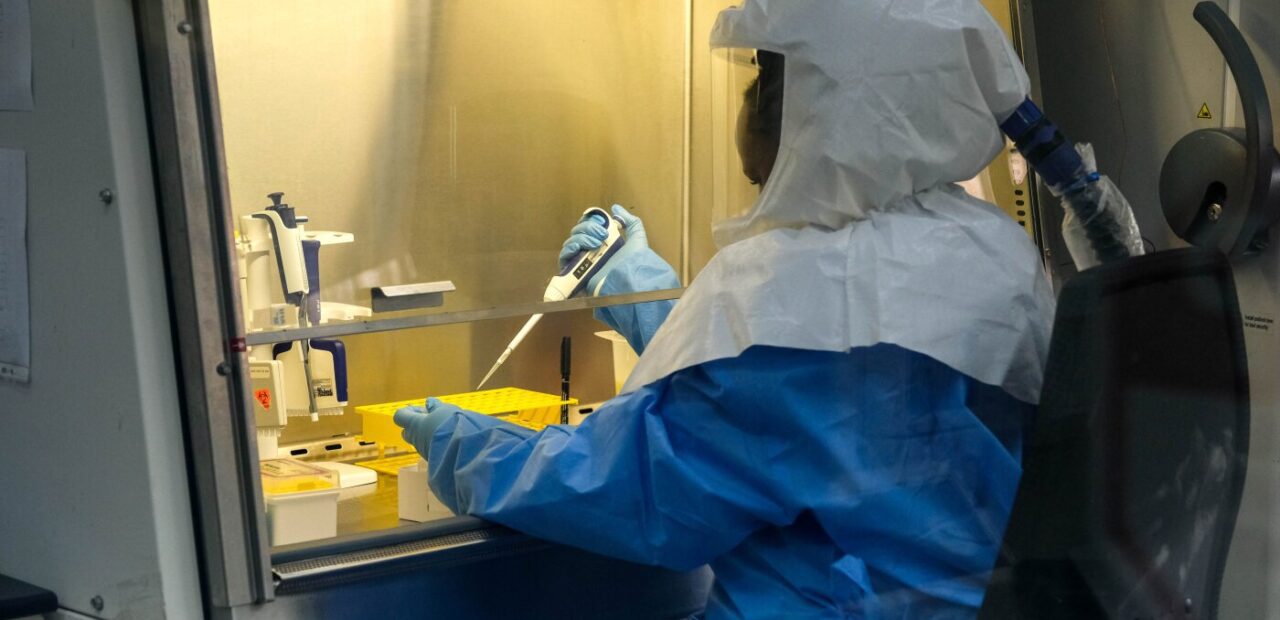
Seven labs and one mobile lab are currently processing tests in northeastern DRC.
Africa CDC is working to have 50 RADI-One testing machines by the end of June.
No rapid tests are approved for Bundibugyo; developing a new test could take a couple of months.
Open questions
How many RADI-One machines are currently deployed in the field.
Whether existing rapid tests for other Ebola species will work effectively for Bundibugyo in the field.
The exact number of cases confirmed as of the article’s publication.
Key figures
Jean-Jaques Muyembe, general director of INRB, DRC’s national biomedical research center
Caia Dominicus, senior technical adviser for the International Pandemic Preparedness Secretariat
Abdirahman Mahamud, director of health emergency alert and response operations at the World Health Organization
Yap Boum, senior official at Africa CDC
Abraar Karan, infectious disease physician at Stanford University
Robert Garry, microbiologist at Tulane University
Ranu Dhillon, global health physician who advised Guinea on the 2014 Ebola outbreak
An unnamed laboratory technician in Bunia
Sources: NPR