



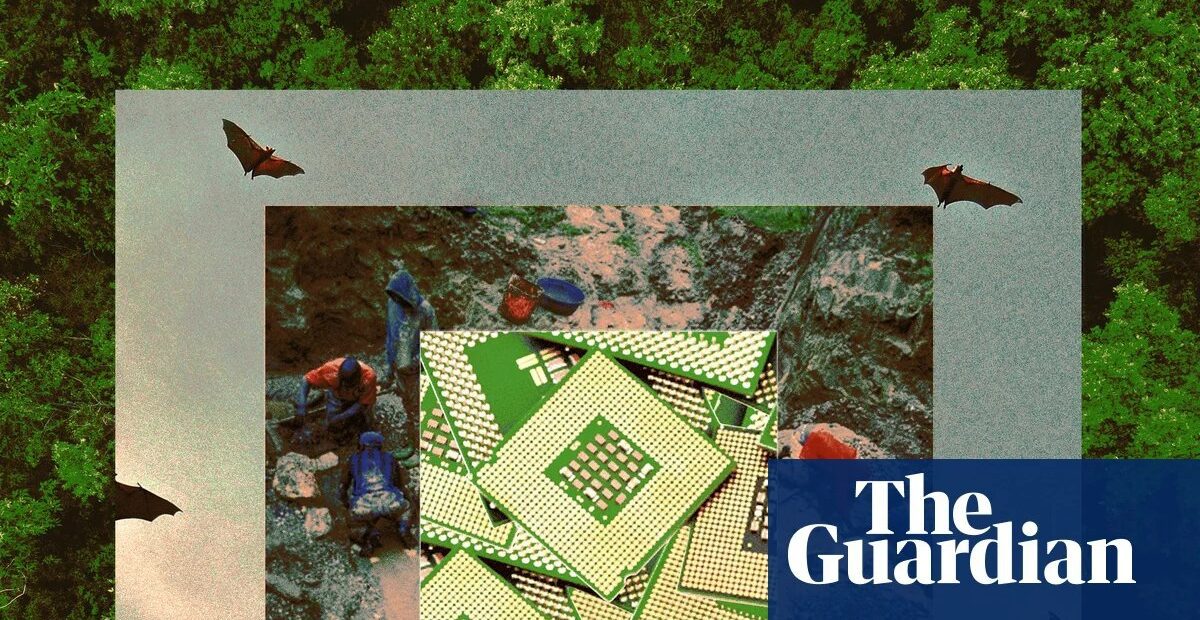
Ebola outbreaks linked to deforestation and mineral mining, analysis finds

8 reported1 unconfirmed
A new analysis published by The Guardian reports that recent large Ebola outbreaks, including the current one in the Democratic Republic of the Congo (DRC) and Uganda, are linked to deforestation driven partly by global demand for minerals used in smartphones and other tech products. The article states that cutting down forests where bats live forces the animals into closer contact with humans, increasing exposure to the virus. A 2025 analysis found that each percent increase in deforestation in Central Africa spikes malaria and Ebola incidence by 20% to 40%. The current Bundibugyo Ebola outbreak was preceded by a record loss of 1.5 million acres of Congo basin rainforest in 2024, according to satellite data from Global Forest Watch. The article also notes that artisanal mining for minerals like gold, coltan, and cobalt employs an estimated 2 million people in the DRC, and that the first cluster of fatal cases in the current outbreak emerged in Mongbwalu, a mining town with unregulated gold mining areas. The piece is written by Sonia Shah, author of several books on pandemics.
What’s reported
The current Ebola outbreak began in early May 2026 and has caused 363 confirmed cases in the DRC and crossed into Uganda.
A 2025 analysis found that each percent increase in deforestation in Central Africa spikes malaria and Ebola incidence by 20% to 40%.
The 2014 Ebola epidemic was preceded by the loss of 85% of forest cover in the south-west corner of Guinea.
The current Bundibugyo Ebola outbreak was preceded by a record loss of 1.5 million acres of Congo basin rainforest in 2024, per Global Forest Watch satellite data.
Artisanal mining employs an estimated 2 million people in the DRC, including over 380,000 in eastern DRC.
The first cluster of fatal cases in the current outbreak emerged in Mongbwalu, a swelling mining town with unregulated gold mining areas.
Global demand for “3TG” minerals (tungsten, tin, tantalum, gold) is expected to triple in coming years.
Nearly 20% of forest-dwelling people in Gabon have developed immune protections against Ebolavirus, according to one survey.
Open questions
Whether artisanal mining played a role in the sequence of events that sparked the current epidemic is unknown, as stated in the article.
Key figures
Sonia Shah, author of the article and author of five books including “Pandemic: Tracking Contagions, from Cholera to Ebola and Beyond”
Malte Ladewig, economist at the Norwegian University of Life Sciences
Matthew Hansen, scientist who tracks changes in global forest cover using satellite data from NASA and the US Geological Survey
Sources: The Guardian