



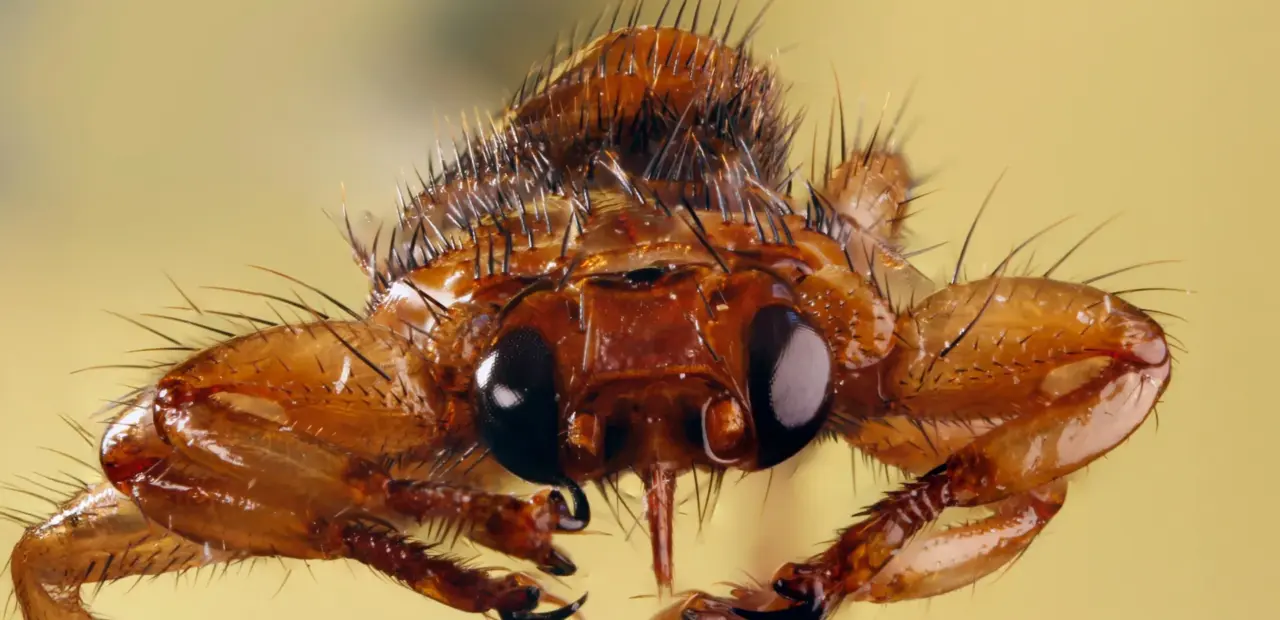
Deer keds reduce visual gene activity after finding host, study finds

8 reported
A blood-feeding fly known as the deer ked appears to reduce its visual sensitivity after locating a host and permanently giving up flight, according to new research published in the Journal of Experimental Biology. Scientists from Aberystwyth University and the University of Florence studied deer keds at different life stages, comparing winged adults searching for hosts with wingless adults collected from deer. The team focused on opsin genes associated with visual sensitivity and found that after the flies shed their wings and become permanent parasites, activity of these genes reduces to about half the previous level. Researchers believe the flies are sacrificing sharp eyesight to conserve energy for functions such as digestion and reproduction. The study provides insight into how parasites adjust their sensory systems when their lifestyles change dramatically. Scientists say a better understanding of how deer keds and other biting flies use their senses could eventually contribute to improved monitoring and control strategies.
What’s reported
Deer keds are biting flies found throughout Europe, Asia, Africa, and the Americas.
As adults, they use flight and vision to search for hosts, most often deer, but sometimes target humans and other mammals.
Once a deer ked lands on a host, it permanently sheds its wings and spends the rest of its life moving through fur and feeding on blood.
Researchers from Aberystwyth University and the University of Florence studied deer keds at different life cycle points.
The team compared winged adults actively searching for hosts with wingless adults collected from deer.
The study focused on opsin genes, which are associated with visual sensitivity.
After deer keds lose their wings and become ectoparasites, activity of their opsin genes reduces to around half the previous level.
The study was published in the Journal of Experimental Biology.
Key figures
Dr. Roger Santer, Department of Life Sciences, Aberystwyth University (led the study)
David C. Wilcockson, Martin T. Swain, Annalisa Andreani, Anita Nencioni, Patrizia Sacchetti (co-authors listed in journal reference)
Sources: ScienceDaily