

Lake Turkana rising waters displace communities and increase crocodile attacks

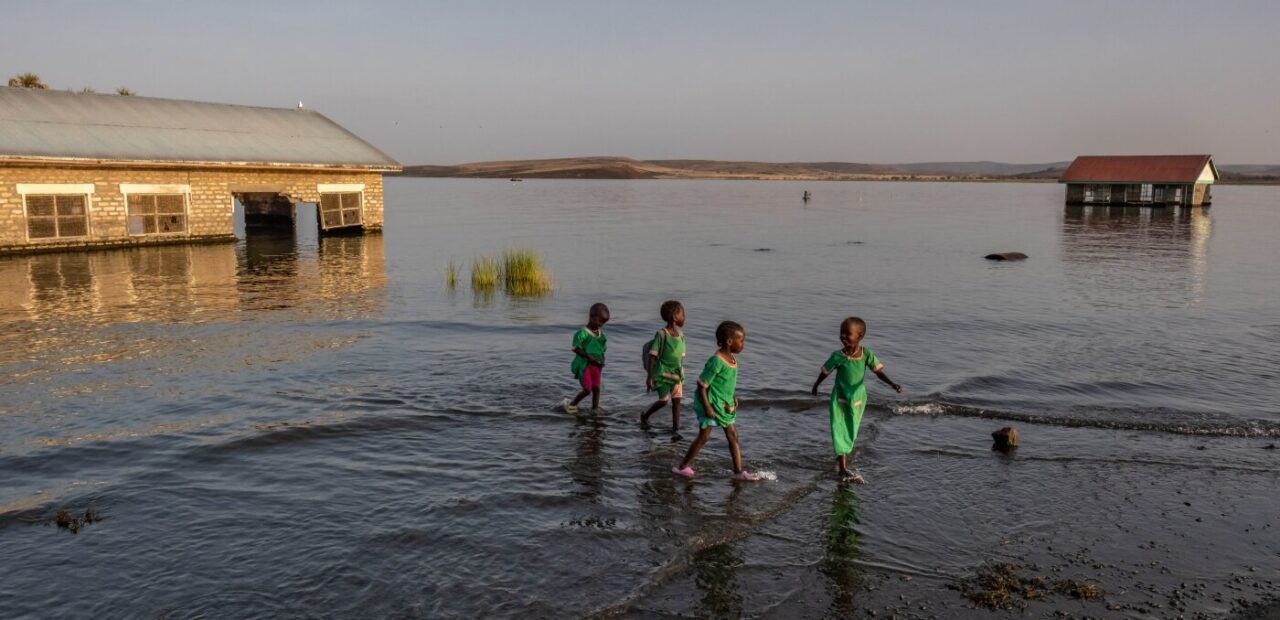
Lake Turkana, the world’s largest permanent desert lake in northern Kenya, has been steadily expanding since around 2018, swallowing homes, grazing lands, schools, roads, and burial grounds. The rising waters, attributed to climatic and tectonic factors by researchers, have displaced thousands and damaged infrastructure. Fishermen report declining catches due to overcrowding, and the lake’s crocodile population has become more dangerous as rising waters create new hunting grounds. The El Molo people, a small indigenous group, have been particularly affected, with their island community now separated from the mainland by about 660 yards of water. The Kenyan government provides some supplies, but residents say it is insufficient. The lake was placed on UNESCO’s List of World Heritage in Danger in 2018, and conditions have worsened since.
What’s reported
Lake Turkana is the world’s largest permanent desert lake.
The lake began rising rapidly around 2018, attributed to tectonic and climatic factors.
Komote Island, once part of the mainland, is now separated by about 660 yards of water.
Hippos are virtually wiped out and fishermen now catch less than 10 pounds of fish, down from over 250 pounds.
For the El Molo people, the lake is both a livelihood and cornerstone of cultural identity.
In Kalokol, many residents have been displaced three times as waters encroach.
A lodge that was a tourist mainstay lost 95% of its land and laid off nearly all staff.
Student enrollment at a primary school dropped from over 230 to 139 due to flooding and crocodile hazards.
In February 2025, more than 20 people were killed in clashes between Turkana and Dassanech fishermen near the Ethiopian border.
Nyabonte Kuras, a Dassanech fisherman, reported that six people from his 30-home village have been killed by rivals on the lake in recent years.
Ng’ikalei Loito lost her legs in a crocodile attack and her husband was killed in a cattle raid the same year.
The Kenya Marine and Fisheries Research Institute (KMFRI) says fish stocks may still be sufficient, but most fishing grounds are beyond reach of subsistence fishers using rafts.
Only 12% of vessels are motorized; over half are rafts made of doum palms.
Conflicting accounts
Nyabonte Kuras believes crocodile attacks are increasing because fish, their primary food, is dwindling. The Turkana County government says the increase is due to rising lake levels creating flooded scrubland that brings people and crocodiles into closer contact.
Misconceptions
The decline in fishermen’s catches may not be due to overall fish stock depletion. Researchers say historical data is limited, but recent surveys suggest the lake still holds enough fish to sustain a thriving industry. The problem is that most fishing grounds are in deeper water beyond the reach of subsistence fishers.
Key figures
Alfred Lenkutuk (71-year-old El Molo man, resident of Komote Island)
John Wambisa (geography teacher at Komote Island school)
Kevin Obiero (researcher, Kenya Marine and Fisheries Research Institute, studying lake since 2012)
Nyabonte Kuras (24-year-old Dassanech fisherman)
Ng’ikalei Loito (33-year-old woman, crocodile attack survivor)
Turkana County government (official statement on crocodile attacks)
Sources: NPR