



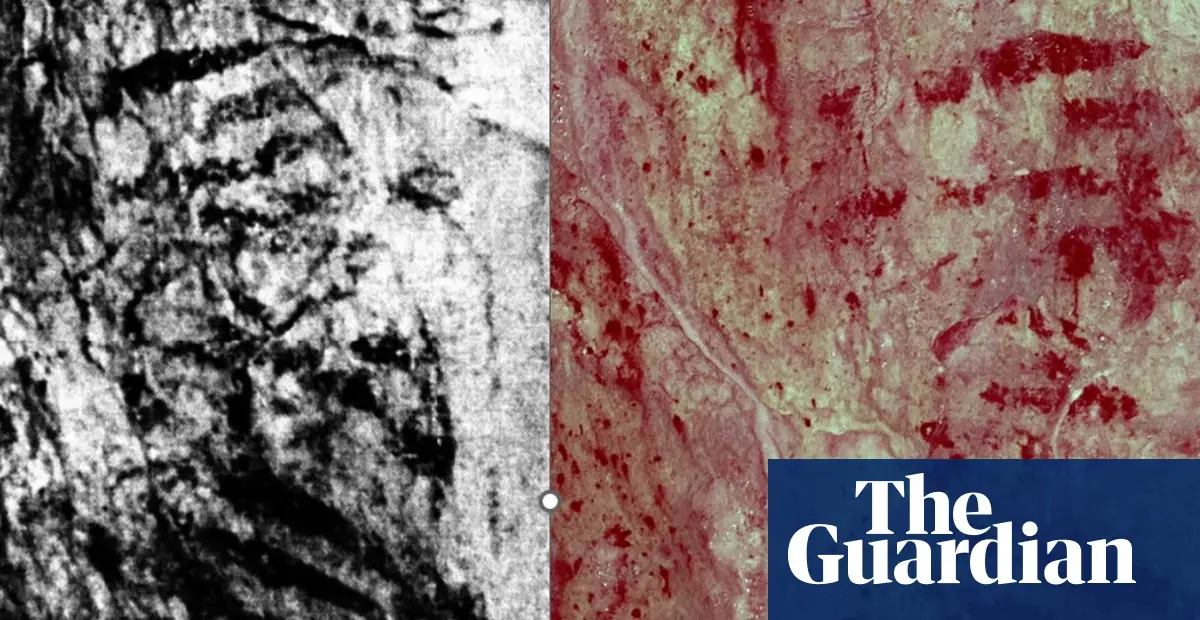
Striped rock dismissed as natural in 1928 reclassified as UK’s oldest cave art

A striped rock panel discovered in a Welsh cave in 1912 and later dismissed as a natural stain has been reclassified as the UK’s oldest known cave art. Archaeologists used uranium-thorium dating to determine the red pigment lines were painted 17,100 years ago, making it the oldest example in Britain and north-western Europe. The initial discovery at Bacon Hole near the Mumbles in south Wales was made by professors William Sollas and Henri Breuil, but by 1928 experts believed the red streaks were mineral seepage. New analysis revealed a deliberate “pigment recipe” of calcite and clay residues, applied by finger in an equidistant horizontal pattern. The research, led by Dr George Nash and published in the journal Quaternary, confirms the original 1912 interpretation. The cave is under the custodianship of the National Trust of Wales, which will announce the findings this week.
What’s reported
In 1912, the Guardian reported the discovery of Palaeolithic rock art on the walls of Bacon Hole, near the Mumbles in south Wales.
By 1928, the painted panel was dismissed as a natural phenomenon of red oxide mineral seeping through rock.
New analysis using uranium-thorium dating shows the pigment was created 17,100 years ago.
This makes it the oldest rock art in the British Isles and north-western Europe, according to archaeologist Dr George Nash.
The research was published in the journal Quaternary by an international team including academics from the universities of Southampton and Swansea.
The paint was applied by finger in an equidistant horizontal pattern, indicating deliberate human agency.
The cave is under the custodianship of the National Trust of Wales, which will officially announce the research this week.
Key figures
Dr George Nash – British specialist in prehistoric art, associate professor at the Geosciences Centre of Coimbra University and honorary research fellow at the University of Liverpool; headed the international research team.
Professor William Sollas – co-discoverer of the panel in 1912.
Professor Henri Breuil – co-discoverer of the panel in 1912.
Sources: The Guardian