



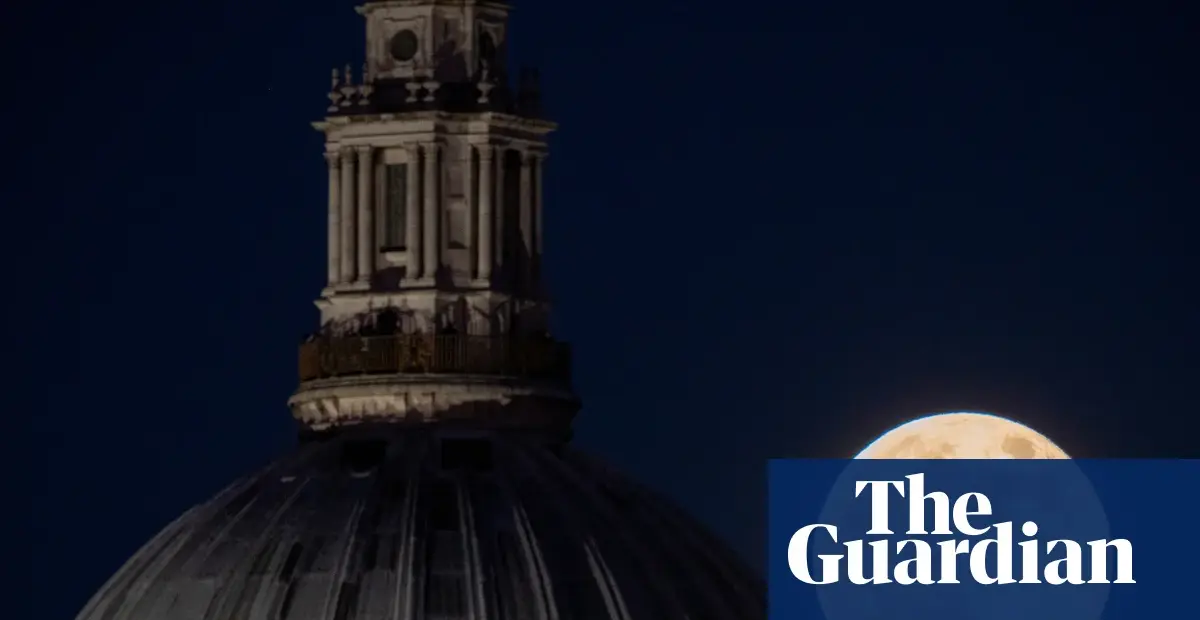
Blue Micromoon Occurs This Weekend, Rare Event Seen Once Every Few Decades

The Story
This weekend, a rare blue micromoon will be visible in the night sky. According to Dr Greg Brown, an astronomer at the Royal Observatory Greenwich, the event combines a monthly blue moon – the second full moon in a single calendar month – with a micromoon, which occurs when a full moon is near its furthest point from Earth. A micromoon appears about 14% smaller than a supermoon and about 6% smaller than a typical full moon. While blue moons happen every couple of years and micromoons two or three times a year, a blue micromoon occurs about once every couple of decades, though they are not regular. The exact full moon time on 31 May is 9:45am BST, but Brown advises viewing on Saturday or Sunday night as the moon will appear indistinguishable from full. In the northern hemisphere the moon will be relatively low in the sky, while in the southern hemisphere it will be very high. Despite its name, the moon will not appear blue, though an unrelated phenomenon involving dust from forest fires or volcanic eruptions can cause a bluish tinge.
Key Facts
- The blue micromoon is a monthly blue moon (second full moon in a month) and a micromoon (full moon near its farthest point from Earth).
- The exact full moon time on 31 May is 9:45am BST (4:45am Eastern Time, 6:45pm AEST).
- A micromoon appears about 14% smaller than a supermoon and about 6% smaller than a typical full moon.
- Blue moons occur every couple of years; micromoons occur two or three times a year.
- A blue micromoon occurs about once every couple of decades, but events are not regular.
- Using the same definition, the next blue micromoon for the UK appears to be in 2066; for parts of the US, in 2053.
- The moon will be relatively low in the northern hemisphere and very high in the southern hemisphere.
- The moon will not appear blue, but unusual dust from fires or volcanoes can cause a blue tint.
- The phrase “once in a blue moon” may be linked to the rare blue tint from smoke or ash.
Conflicting Reports
No conflicting reports identified in the source article.
Still Unclear
No open questions identified in the source article.
Misconceptions
The article directly addresses the misconception that a blue moon appears blue; it clarifies the moon is not actually blue, though an unrelated phenomenon from dust in the atmosphere can cause a bluish tinge.
Key Figures
- Dr Greg Brown, astronomer at the Royal Observatory Greenwich.
Sources: The Guardian