



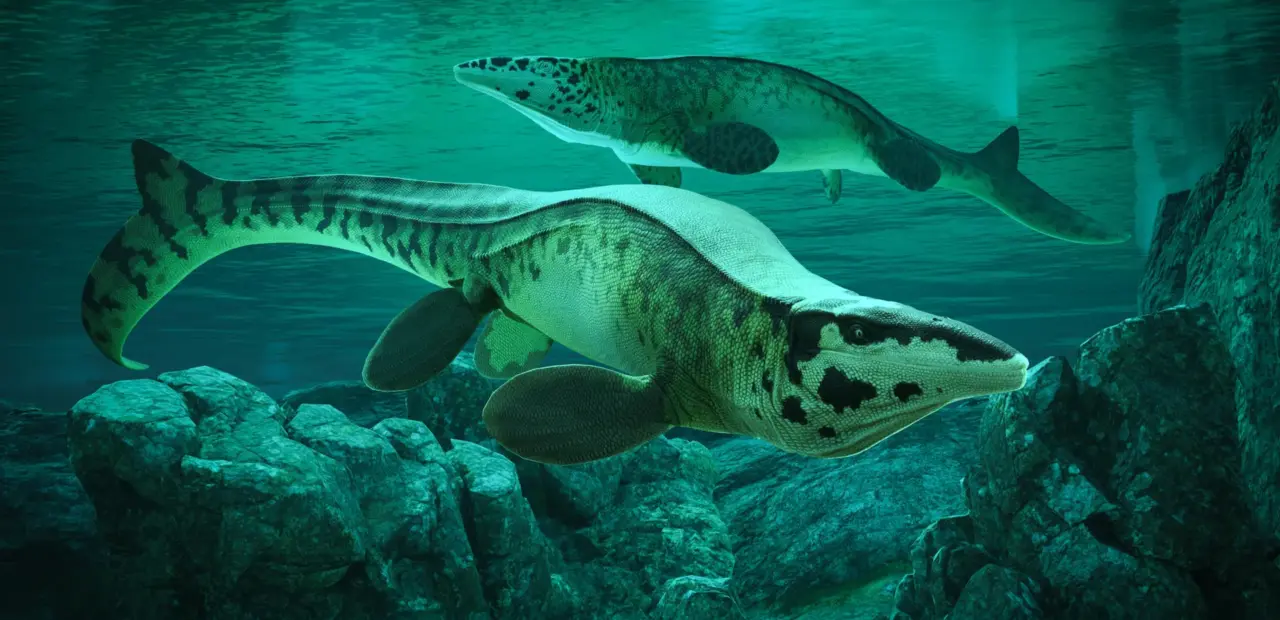
New mosasaur species Tylosaurus rex identified from Texas fossils

The Story
Scientists have identified a new species of mosasaur named Tylosaurus rex from fossils found in northern Texas. The marine reptile measured up to 43 feet long and lived about 80 million years ago. The discovery challenges long-standing ideas about mosasaur evolution.
Key Facts
- The research was led by scientists from the American Museum of Natural History, the Perot Museum of Nature and Science, and Southern Methodist University.
- Lead author Amelia Zietlow, now at the History Museum at the Castle in Wisconsin, began the work as a Ph.D. student at the American Museum of Natural History’s Richard Gilder Graduate School.
- The new species was distinguished from Tylosaurus proriger by its larger size, finely serrated teeth, and different location and time period.
- The name Tylosaurus rex honors paleontologist John Thurmond, who informally referred to them as “Tylosaurus thalassotyrannus” meaning “sea tyrant.”
- The holotype specimen was discovered in 1979 near an artificial reservoir outside Dallas and is displayed at the Perot Museum.
- Evidence of intraspecies violence includes a specimen nicknamed “The Black Knight” with a missing snout tip and fractured lower jaw.
- Other fossils reassigned to T. rex include “Bunker” at the University of Kansas and “Sophie” at the Yale Peabody Museum.
- The study was published in the Bulletin of the American Museum of Natural History on May 21, 2026.
Conflicting Reports
No conflicting reports identified in the source article.
Still Unclear
No open questions identified in the source article.
Misconceptions
No widespread misconceptions addressed in the source article.
Key Figures
- Amelia Zietlow, lead author, Ph.D. student during research, now at the History Museum at the Castle in Wisconsin.
- Ron Tykoski, study co-author, vice-president of science and curator of vertebrate paleontology at the Perot Museum.
- Michael Polcyn, study co-author from Southern Methodist University.
- John Thurmond, paleontologist honored in the species name.
Sources: ScienceDaily