



Alan Turing short story reveals playful, literary side, scholar says

10 reported
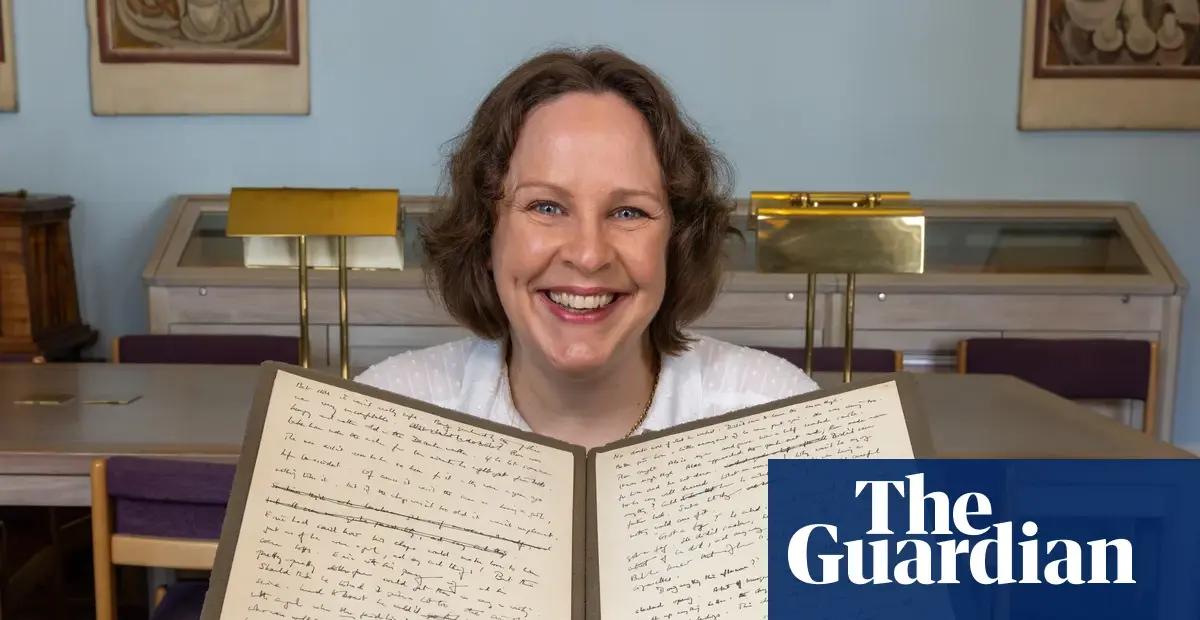
A previously little-known short story written by Alan Turing in the year after his arrest for gross indecency has been transcribed and studied by a Cambridge University English literature professor. The professor, Sarah Dillon, argues the story challenges the popular understanding of Turing as an isolated, humourless mathematician, instead showing him as playful, funny, cheeky, and literary. The six-page incomplete story, titled Pryce’s Buoy, was found in the King’s College, Cambridge, archives and was known about by Turing experts but never fully transcribed or studied by a literary scholar. Dillon believes the story was probably written in late 1952 or early 1953 and features characters that include a working-class sex worker and a scientist, with the scientist being an autofictional representation of Turing. The story describes a potential sexual encounter and includes details about money and hesitation, which Dillon says evokes the uncertainty of such an encounter. Dillon is certain Turing was influenced by writer Angus Wilson and notes that Turing copied phrases and narrative technique from Wilson’s novel Hemlock and After. Dillon’s findings are published in the Review of English Studies, and she hopes the story provides fresh insight into Turing, who died in 1954 at age 41 from cyanide poisoning.
What’s reported
Sarah Dillon is a Cambridge University English literature professor.
She transcribed and studied a short story Turing wrote after his 1952 arrest for gross indecency.
The story is titled Pryce’s Buoy and is six pages, incomplete.
It was found in the King’s College, Cambridge, archives.
Dillon believes it was written in late 1952 or early 1953.
Characters include Ron Miller, a working-class sex worker, and Alec Pryce, a scientist.
Dillon says Alec is autofictional and represents Turing.
The story includes a line about Ron thinking he could get five bob for sex under the arches.
Dillon says Turing copied phrases and narrative technique from Angus Wilson’s novel Hemlock and After.
Dillon’s findings are published in the Review of English Studies.
Misconceptions
The source article addresses the misconception that Turing was arrogant, isolated, humourless, and tortured, as popularized by the 2014 film The Imitation Game. Dillon states the film is not accurate and makes historical mistakes, depicting Turing as having no sense of humour and being very individualistic.
Key figures
Sarah Dillon, Cambridge University English literature professor
Alan Turing, code breaker and computing pioneer
Ron Miller, fictional character in Turing’s story
Alec Pryce, fictional character in Turing’s story
Angus Wilson, writer
Benedict Cumberbatch, actor who played Turing in The Imitation Game
Sources: The Guardian