

Trump $1 Coin Raises Legal Questions, Experts Say

15 reported2 unconfirmed
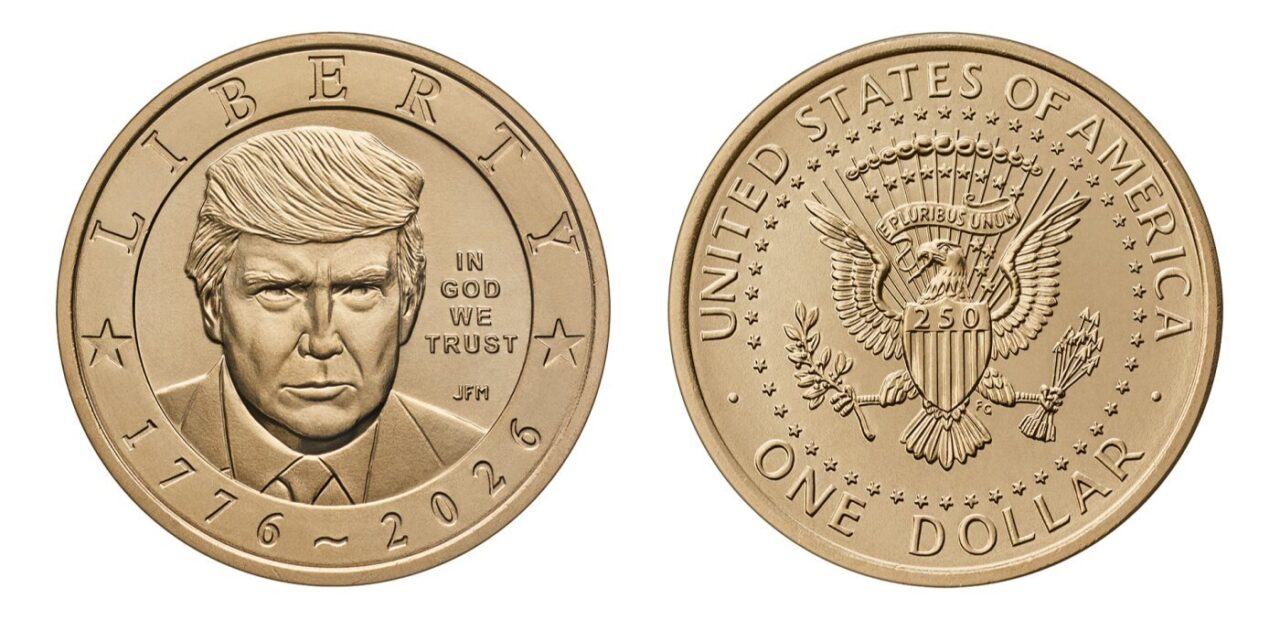
Treasury Secretary Scott Bessent unveiled designs for a commemorative $1 gold-colored coin that the U.S. Mint will produce for the country’s 250th birthday. One side features the bald eagle from the U.S. seal; the other shows a close-up of President Trump encircled by “Liberty” and “1776-2026.” Legal experts say the coin likely violates federal law prohibiting the likeness of any living person on currency. The Treasury Department argues the coin is legal under a 2020 law authorizing special-edition 250th coins. A coin with a sitting president’s face has only been minted once, for Calvin Coolidge in 1926. The coin will be minted in Philadelphia and available for purchase in the fall.
What’s reported
Treasury Secretary Scott Bessent unveiled designs for a commemorative $1 gold-colored coin this week.
One side shows the bald eagle from the U.S. seal; the other shows President Trump’s face encircled by “Liberty” and “1776-2026.”
Jeremy Paul, a constitutional law professor at Northeastern University, said the law prohibits the likeness of any living person on currency.
The Treasury Department cites a 2020 law authorizing the treasury secretary to issue $1 coins for the Semiquincentennial.
A coin with a sitting president’s face has only been minted once, for Calvin Coolidge in 1926.
The coin will be minted in Philadelphia and available for purchase in the fall.
The Treasury announced in March that all future paper currency will bear Trump’s signature.
The Treasury prepared a $250 bill featuring Trump’s face, but congressional approval does not seem imminent.
The Treasury is no longer moving ahead with efforts to put Harriet Tubman on the $20 bill.
Rep. Joyce Beatty, D-Ohio, criticized the coin and the Tubman decision on Twitter.
Richard Painter, former chief White House ethics lawyer for President George W. Bush, said the practice is associated with monarchies and authoritarian governments.
The Thayer Amendment of 1866 states: “Only the portrait of a deceased individual may appear on United States currency and securities.”
The 2005 Presidential $1 Coin Act says a president can only be eligible if deceased for at least two years.
In March, a retired lawyer in Portland, Ore., sued to block the coin; a federal judge denied the motion.
The Treasury and White House did not respond to NPR’s questions about the coin’s cost or where proceeds will go.
Open questions
The exact cost of the coin and where proceeds will go.
Whether court challenges will succeed.
Key figures
President Donald Trump
Treasury Secretary Scott Bessent
Jeremy Paul, professor and former dean at Northeastern University School of Law
Rep. Joyce Beatty, D-Ohio
Richard Painter, former chief White House ethics lawyer for President George W. Bush
James Rickher, retired lawyer in Portland, Ore.
Sources: NPR