

Coffee’s role in American Revolution examined in new report

6 reported
A report from NPR examines the historical role of coffee in the American Revolution, noting that coffee and coffeehouses were important to colonial culture and revolutionary planning. Historian Michelle Craig McDonald states that the first documented mortar and pestle for grinding coffee beans was on the Mayflower in 1620, and the first colonial coffeehouse opened in Boston in 1676. While some accounts claim the Boston Tea Party of 1773 caused a widespread switch from tea to coffee, McDonald says colonists drank coffee all along and it was more broadly available and cheaper than tea. Coffeehouses like the Green Dragon in Boston and the Old London Coffeehouse in Philadelphia served as meeting places for planning revolutionary acts. The report also notes that coffee plantations relied on enslaved labor, with half the world's coffee grown in Saint-Domingue by 1790, creating a contradiction with the ideals of the Declaration of Independence.
What’s reported
The first documented mortar and pestle for grinding coffee beans was on the Mayflower in 1620.
The first coffeehouse in the colonies opened in 1676 in Boston.
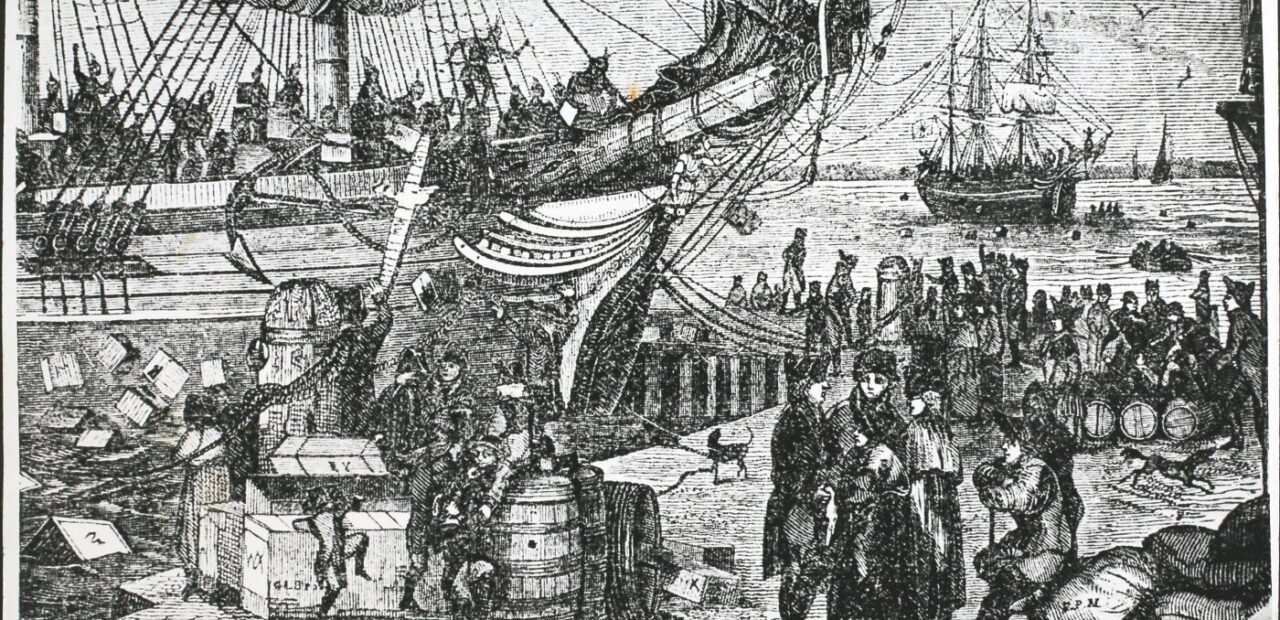
The Boston Tea Party occurred on Dec. 16, 1773, when colonists threw over 92,000 pounds of tea into Boston Harbor.
Historian Michelle Craig McDonald says coffee was more broadly available and cheaper than tea even before the Boston Tea Party.
Coffeehouses such as the Green Dragon and Old London Coffeehouse were used for planning revolutionary acts.
By 1790, half the world's coffee was grown in Saint-Domingue (present-day Haiti) using enslaved labor.
Misconceptions
The article addresses the misconception that the Boston Tea Party caused a dramatic switch from tea to coffee, stating that colonists had been drinking coffee all along and it was already more widely available.
Key figures
Michelle Craig McDonald, historian and author of "Coffee Nation: How One Commodity Transformed the Early United States"
John Adams, later second U.S. president, wrote a letter in July 1774 about renouncing tea
Joyce Chaplin, professor of early American history at Harvard University
Mark Pendergrast, author of "Uncommon Grounds: The History of Coffee and How It Transformed Our World"
Sources: NPR