



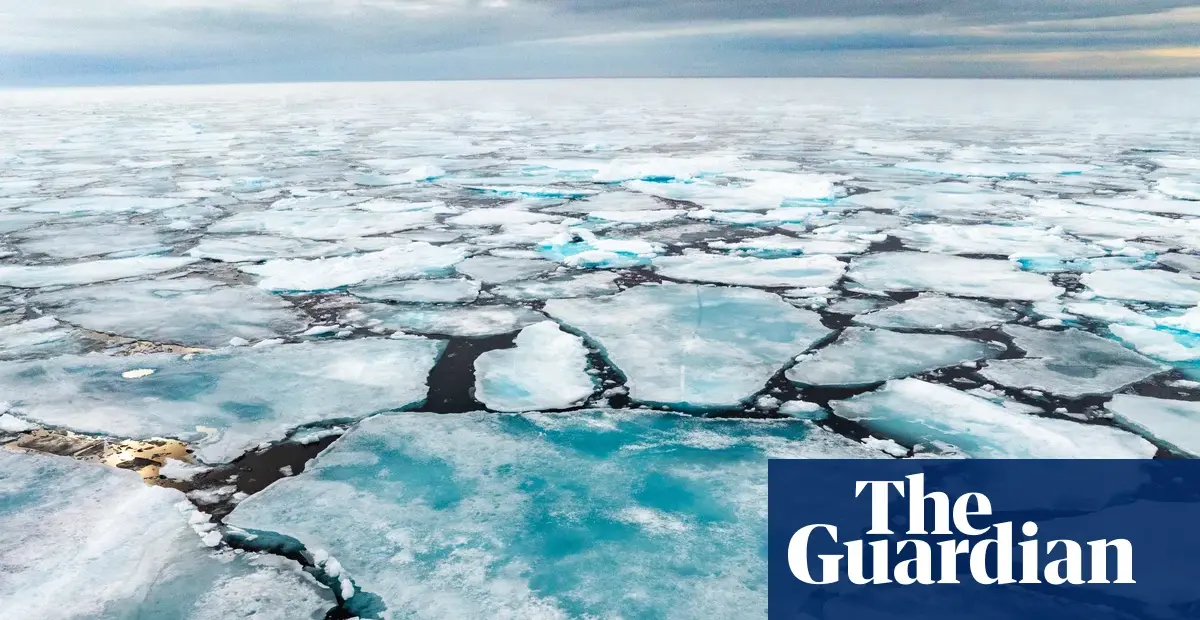
Arctic sea ice slowdown ends with largest winter decline on record

6 reported
A previously reported slowdown in Arctic sea ice decline has ended, according to a new study that documents the largest year-to-year wintertime reduction ever recorded. Researchers had found in a study published last summer that melting sea ice slowed between 2005 and 2024, with no statistically significant decline in extent during that period. That study attributed the temporary reprieve to natural variations in ocean currents that balanced rising global temperatures, but warned melting would likely resume at about double the long-term rate within five to 10 years. The new study, using the most recent satellite observations, concludes the 2005 to 2024 slowdown was temporary rather than sustained. Lead author Dr Duo Chan of the University of Southampton said what looked like a pause in the early 2020s now appears to have been a temporary slowdown within a longer-term decline. The researchers found that between 2024 and 2025, Arctic sea ice declined by 5.8%, the largest year-to-year wintertime drop on record. Co-author Dr Alessandro Silvano said the sharp drop in 2025 was unusual but physically plausible under current Arctic warming.
What’s reported
A study published last summer found no statistically significant decline in Arctic sea ice extent between 2005 and 2024.
Researchers attributed the slowdown to natural variations in ocean currents that balanced rising global temperatures.
The new study finds the slowdown was temporary and has ended.
Sea ice area in September has halved since 1979, when satellite measurements began.
Between 2024 and 2025, Arctic sea ice declined by 5.8%, the largest year-to-year wintertime drop ever recorded.
Dr Duo Chan stated that low winter sea ice extents in 2025 and 2026 show Arctic sea ice loss has not stopped.
Key figures
Dr Duo Chan, lead author, University of Southampton’s School of Ocean and Earth Science
Dr Alessandro Silvano, co-author, University of Southampton
Sources: The Guardian