



Finger length study links prenatal estrogen to brain evolution

7 reported
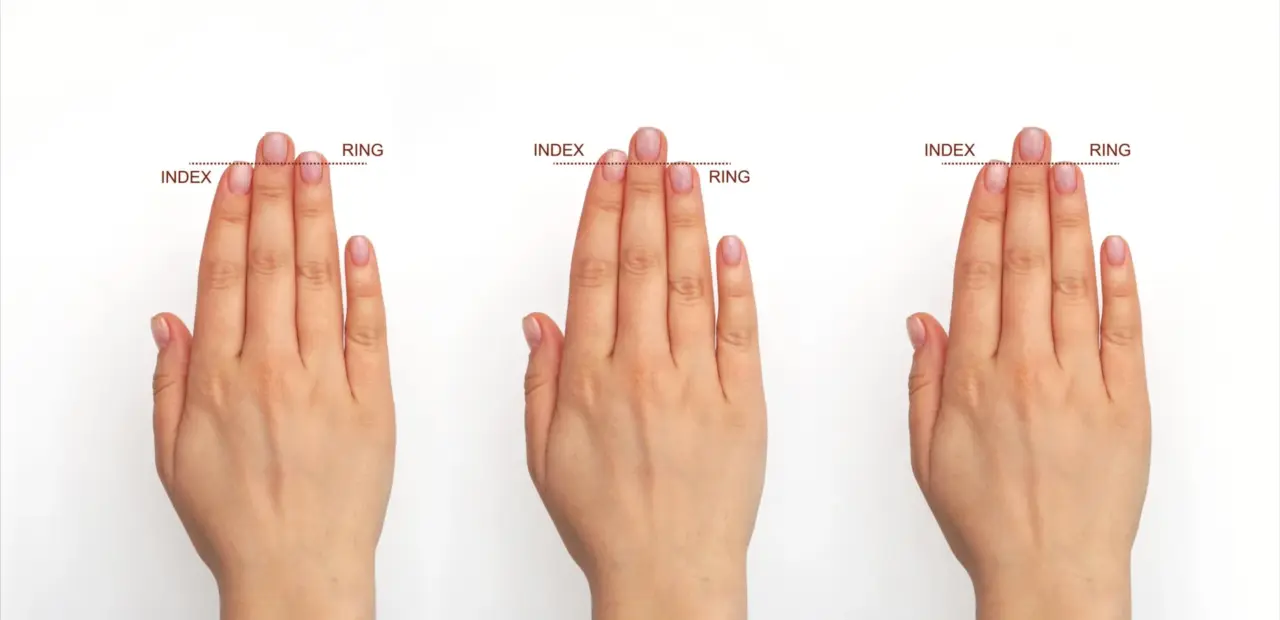
A study of 225 newborns suggests prenatal estrogen may have played a role in the evolution of larger human brains, according to research published in the journal Early Human Development. Researchers from Swansea University and Istanbul University measured the digit ratio of each baby, comparing the length of the index finger to the ring finger, and then compared that measurement with head circumference. The study found that boys with a higher digit ratio, indicating higher prenatal estrogen exposure, tended to have larger head circumferences, which is associated with brain size. The same relationship was not observed in girls. The findings support the estrogenized ape hypothesis, which proposes that larger human brains evolved alongside a less robust, more feminine skeleton. The researchers note that larger brains may have provided evolutionary advantages, even if the hormonal conditions also carried biological costs for males.
What’s reported
The study examined 225 newborns: 100 boys and 125 girls.
Digit ratio (2D:4D) compares index finger length to ring finger length and is used as an indirect indicator of prenatal estrogen and testosterone exposure.
Boys with a higher 2D:4D ratio (indicating high prenatal estrogen) tended to have larger head circumference.
The same relationship was not found in girls.
Head circumference is commonly used as a general indicator of brain size in newborns.
The findings support the estrogenized ape hypothesis, which links larger brain evolution to skeletal feminization.
The study was published in Early Human Development and conducted by researchers from Swansea University and Istanbul University.
Key figures
Professor John Manning, member of Swansea University's Applied Sports, Technology, Exercise and Medicine (A-STEM) research team
Researchers from Istanbul University's Department of Anthropology (Barış Özener, Berna Ertuğrul, Fatih Aydık)
Sources: ScienceDaily