



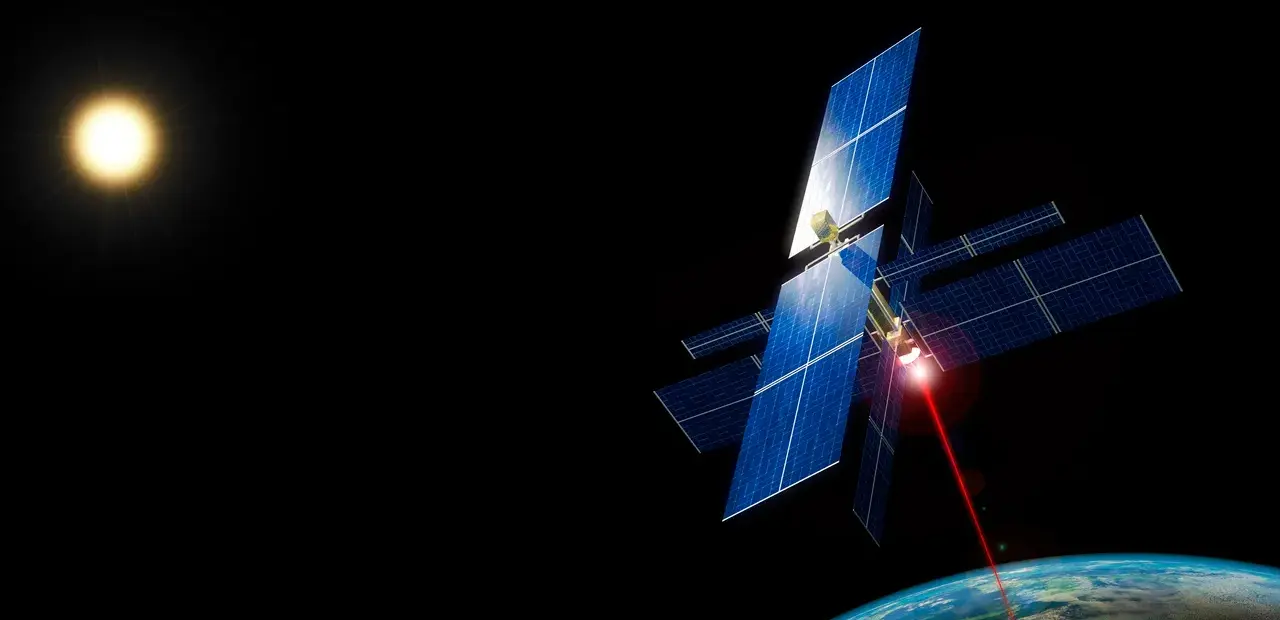
FCC Approves Launch of Reflect Orbital’s Mirror Satellite Eärendil-1

9 verified6 unconfirmed
The US Federal Communications Commission (FCC) has authorized California-based startup Reflect Orbital to build, launch, and operate a prototype mirror satellite in low Earth orbit. Named Eärendil-1 after a character from J.R.R. Tolkien's works, the satellite is designed to redirect sunlight to specific areas on Earth after dark using an 18-meter reflective surface. The company plans to eventually operate a constellation of 50,000 such satellites by 2035, offering "on-demand" sunlight for applications including solar energy, search-and-rescue missions, and emergency response. The authorization covers only a single experimental satellite, and any future commercial constellation would require new regulatory approvals. The decision came despite opposition from astronomers and environmental groups who warned about increased light pollution and potential harm to wildlife and aviation safety. Nearly 2,000 public comments opposing the project were filed with the FCC during the regulatory review process.
What’s verified
The US Federal Communications Commission (FCC) authorized Reflect Orbital to launch a mirror satellite named Eärendil-1.
The satellite is equipped with an 18-meter reflective surface designed to redirect sunlight to Earth at night.
Reflect Orbital plans to deploy a constellation of 50,000 satellites by 2035.
The illuminated area on the ground is reported to be approximately 5 kilometers (3 miles) in diameter.
Potential applications include solar energy, search-and-rescue operations, and emergency response.
Astronomers and organizations including the American Astronomical Society, DarkSky International, and the Royal Astronomical Society voiced opposition.
European Southern Observatory official Betty Kioko called the technology "an existential threat" to optical astronomy.
The FCC received nearly 2,000 public comments opposing the proposal.
The authorization covers only a single experimental satellite, not a commercial constellation.
Not yet confirmed
One source reports the satellite's deployment altitude is about 625 kilometers; other sources do not specify altitude.
One source reports that the FCC declined to address concerns about optical astronomy as part of its review; other sources do not mention this aspect.
One source reports that the company pledged to engage with affected stakeholders and the scientific community; other sources do not mention this pledge.
One source lists agriculture as a potential application for the technology; other sources do not include that sector.
The exact launch date is not specified in any source.
The precise mechanism for directing reflected light with claimed precision remains unreported.
Key figures
Reflect Orbital (California-based startup)
Federal Communications Commission (FCC)
Eärendil-1 (mirror satellite)
American Astronomical Society
DarkSky International
Royal Astronomical Society
European Southern Observatory (ESO)
Betty Kioko (ESO institutional affairs officer)