



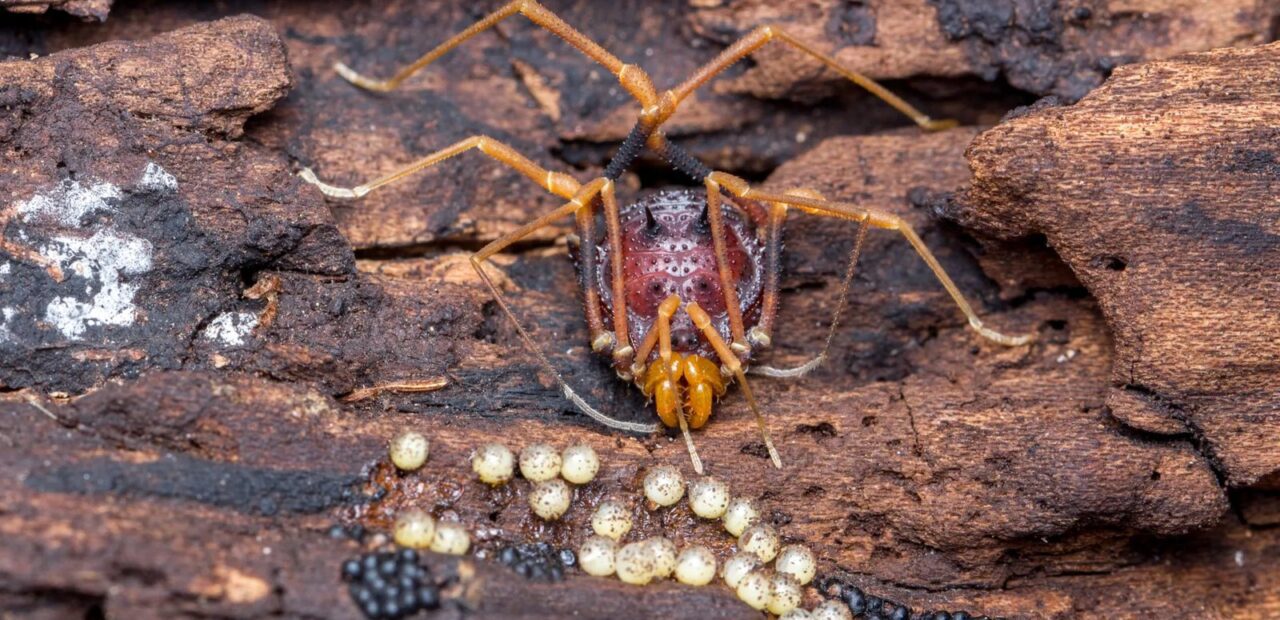
Citizen scientists help trace evolution of parental care in harvestmen

8 reported
Citizen scientists using the iNaturalist platform have helped researchers uncover how parental care evolved in harvestmen, spider-like arachnids. The findings, published in the Zoological Journal of the Linnean Society, show that parental guarding behavior has appeared, disappeared, and evolved again multiple times. By combining nearly 30 years of field research with iNaturalist observations, an international team led by a University of São Paulo scientist more than doubled the documented examples of parental care in harvestmen. The analysis revealed that maternal care evolved only from species with no parental care, while paternal care arose either from species with no care or from species where females already guarded eggs. The researchers propose that when paternal care evolved from maternal care, it likely reflects a form of sexual selection called 'enhanced fecundity.' The iNaturalist search itself took only two days, and the entire project was completed in one week. Lead author Glauco Machado noted that citizen science platforms are making large-scale biological research more accessible, particularly for scientists in the Global South.
What’s reported
The study was published in the Zoological Journal of the Linnean Society.
From 1936 through 2025, published studies documented parental guarding in only 80 harvestman species.
Using iNaturalist, researchers added 62 new records, more than doubling the total.
The iNaturalist search took two days; the entire search was completed in one week.
Maternal care evolved only from species with no parental care.
Paternal care evolved either from species with no care or from species where females guarded eggs.
More than 6,900 species of harvestmen have been identified.
Harvestmen represent more than half of the independently evolved examples of paternal care among arthropods.
Key figures
Glauco Machado, lead author and University of São Paulo scientist
Sources: ScienceDaily