



AI economic plan needed before crisis, single-source report warns

6 reported1 unconfirmed
A single-source report from Vox warns that the United States lacks a detailed, ready-to-pass economic plan for the rapid scaling of artificial intelligence, which the article describes as unfolding faster than the internet or mobile booms. The article, written by a journalist who previously worked at Vox, draws parallels to the policy windows that opened during the 2008 financial crisis and the Covid-19 pandemic, when lawmakers approved large-scale measures like the CARES Act and TARP. The author notes that these crisis windows close quickly, citing how bipartisan support for safety net expansion during Covid evaporated within months. The article states that AI labs have offered broad ideas like sovereign wealth funds and portable benefits but lack legislative detail, while figures like Gina Raimondo have proposed smaller fixes such as retraining. The author is now with the Center for Shared AI Prosperity, a new DC-based research group that is collecting policy proposals for the AI era. The article emphasizes that whoever has a detailed plan ready when a crisis hits will shape the response, as happened with the TARP plan drafted months before the 2008 bank bailouts.
What’s reported
The article reports that Anthropic had an annualized revenue rate of $47 billion as of May, up from $30 billion a month earlier.
The article states that if Anthropic’s revenue continues growing at 56.7 percent per month, it could outpace Amazon by late November or early December 2026.
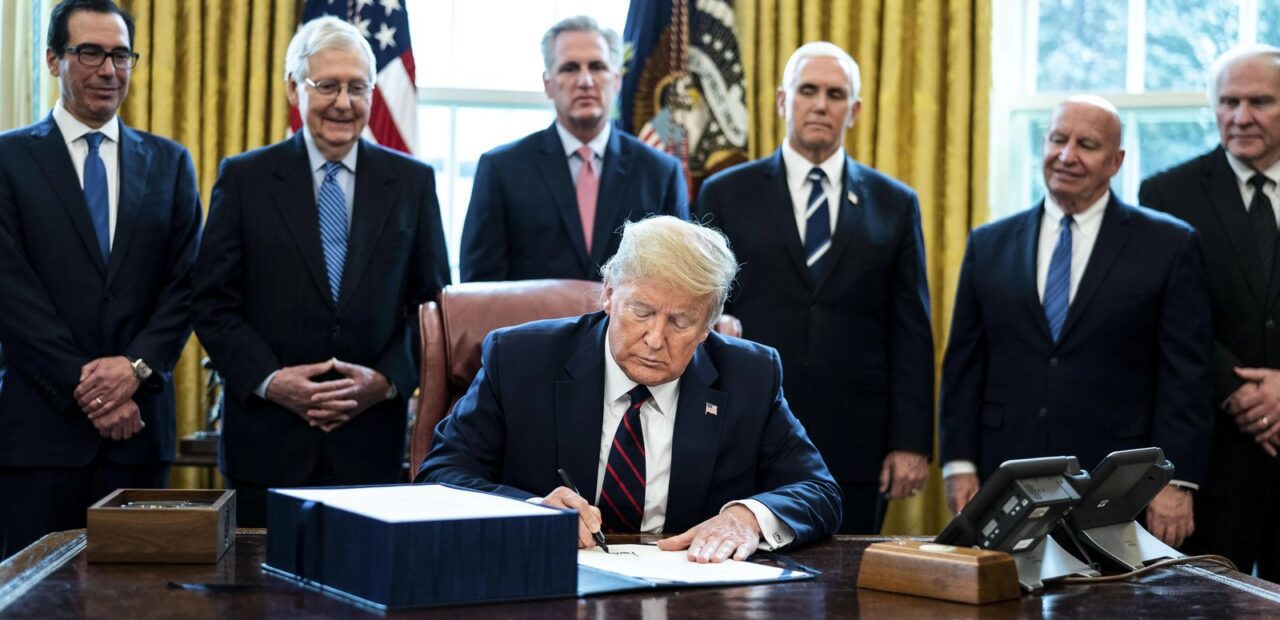
The article notes that the CARES Act included payments of up to $1,200 per eligible adult, $2,400 for married couples, and $500 per child, plus $600 per week in unemployment insurance.
The article says the Senate vote on the CARES Act was unanimous, and the House approved it by voice vote.
The article mentions that the TARP program came from the “Break the Glass Plan” drafted by Bush Treasury officials Neel Kashkari and Philip Swagel in April 2008.
The article states that the Center for Shared AI Prosperity has an open Request for Ideas with funding for the best proposals on tax code and safety net design for the AI era.
Open questions
The article does not specify what specific policy proposals the Center for Shared AI Prosperity is considering or how much funding is available for the Request for Ideas.
Key figures
Tom Cotton, Republican Senator
Gina Raimondo, DC figure mentioned as pushing retraining proposals
Neel Kashkari, former Bush Treasury official
Philip Swagel, former Bush Treasury official
Hank Paulson, former Treasury Secretary under George W. Bush
Nancy Pelosi, former Speaker of the House
Sources: vox.com