



Eastern heat wave threatens World Cup players and fans in Philadelphia

11 reported
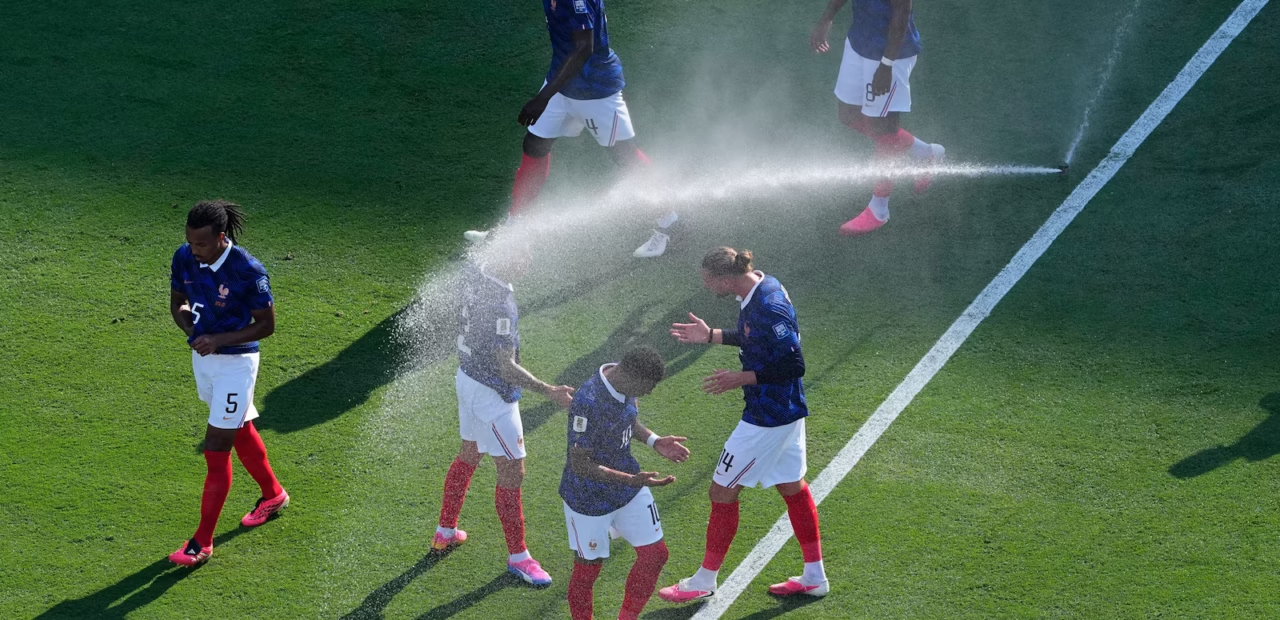
A heat wave across the eastern and central U.S. is expected to make Saturday’s knockout round World Cup match between France and Paraguay in Philadelphia potentially the hottest tournament game so far this year, according to forecasters. The National Weather Service reports peak heat indexes could range from 100 F to 115 F (37.78 C to 46.11 C), with high night temperatures offering little relief and records possibly being broken. Earlier this week, French players used field sprinklers to cool off during their match against Sweden in New Jersey when temperatures hit 90 F (32.22 C). Scientists have criticized FIFA’s heat safety guidelines as “inadequate” and “impossible to justify,” even for heat-acclimatized players, and say matches could be slower and less intense. The world has warmed roughly 1.26 F (0.7 C) since the U.S. last hosted the World Cup three decades ago, according to Berkeley Earth, and scientists with the World Weather Attribution said the humid heat would have been “virtually impossible” without climate change. FIFA has limited outdoor matches during peak heat hours and prioritized covered stadiums for warmer windows, but concerns remain for both athletes and spectators.
What’s reported
Saturday’s knockout round game between France and Paraguay in Philadelphia could be the hottest World Cup match this year.
Peak heat indexes are forecast between 100 F to 115 F (37.78 C to 46.11 C), according to the National Weather Service.
French players used field sprinklers to cool off during their match against Sweden in New Jersey when temperatures hit 90 F (32.22 C).
Scientists say FIFA’s heat safety guidelines are “inadequate” and “impossible to justify.”
The world has warmed roughly 1.26 F (0.7 C) since the U.S. last hosted the World Cup, per Berkeley Earth.
The humid heat would have been “virtually impossible” without climate change, according to World Weather Attribution scientists.
FIFA’s guidelines allow match postponement if wet bulb globe temperature reaches 89.60 F (32 C), but the University of Connecticut’s Korey Stringer Institute CEO said that temperature triggers a “black flag” canceling all training in U.S. military basic training.
The player’s union FIFPRO and the American College of Sports Medicine have called for matches to be delayed at 82.40 F (28 C) for safety.
Mandatory three-minute hydration breaks midway through each half are in place but have drawn criticism from groups who say they interrupt the game’s flow or should be longer.
Exertional heat stroke is the third leading cause of death in athletes.
Cities and stadiums have increased access to shade, cooling areas, and water, with medical personnel stationed at FIFA Fan Festivals and around stadiums.
Key figures
Bharat Venkat, director of the Heat Lab at the University of California, Los Angeles
Ryan Calsbeek, professor of biological sciences at Dartmouth College
Douglas Casa, CEO of the University of Connecticut’s Korey Stringer Institute
Guilherme Passos, sport scientist at the Brazilian Football Federation
Sources: abcnews.com